Original editorial artwork / independent issue concept
Editor's note
What the place leaves with us.
Homecoming can mean a campus, a language, a career, a collection, a workplace or a table. This local review edition gathers 88 public stories from official UBC Magazine and UBC News pages, including current reporting and selected archive context, then writes short original summaries around that shared idea.
Each story links back to original reporting and keeps its source host visible. This is an independent digest, not an official UBC publication. Source images remain rights-review required, and 87 of 88 Jev news classifications remain below the frozen confidence threshold for human review.
A global alumni footprint
435k+members
145+countries
Public homepage statement observed September 19, 2026. It is not a count of readers or active participants.
UBC field notes
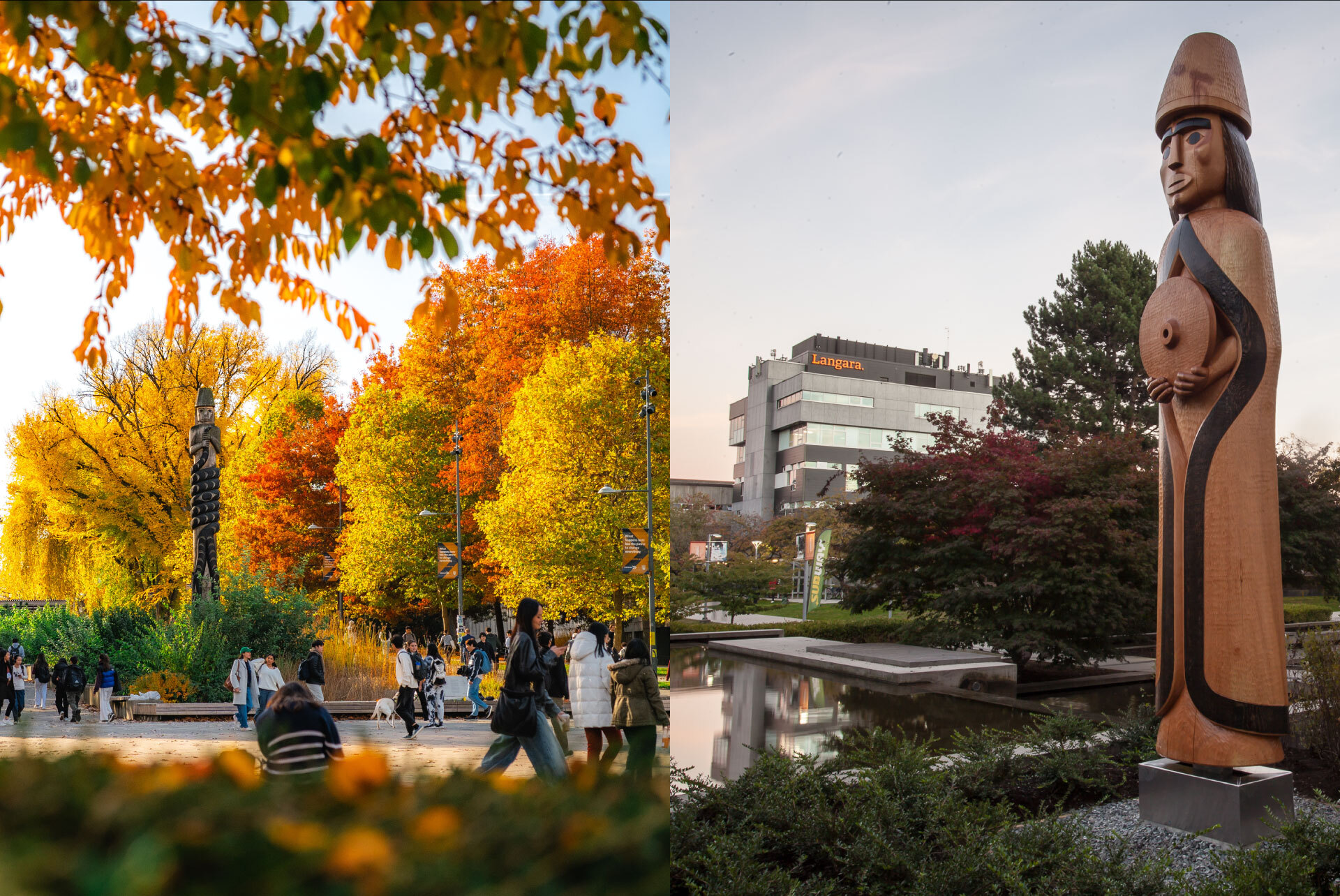
Campus, in three views.
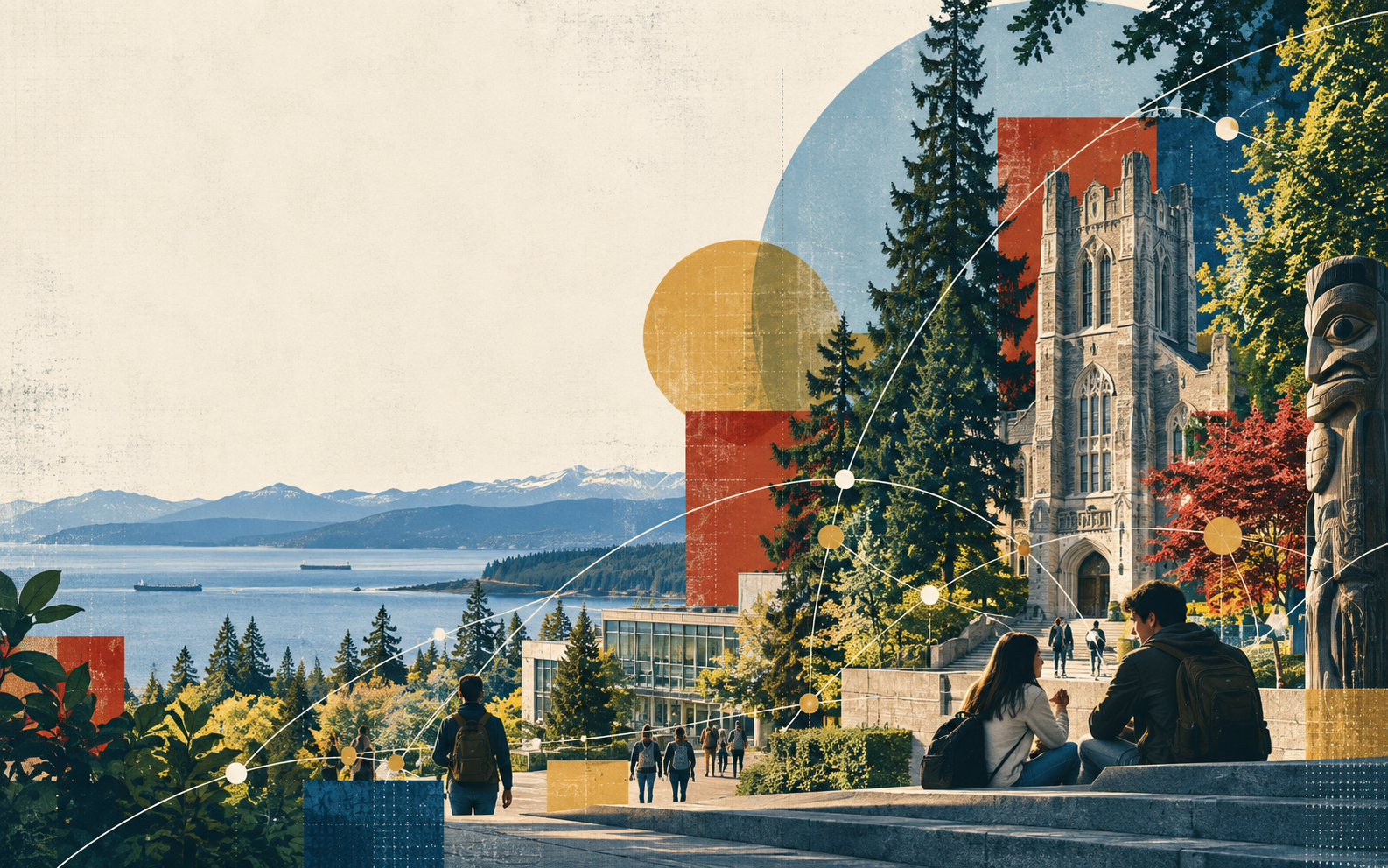
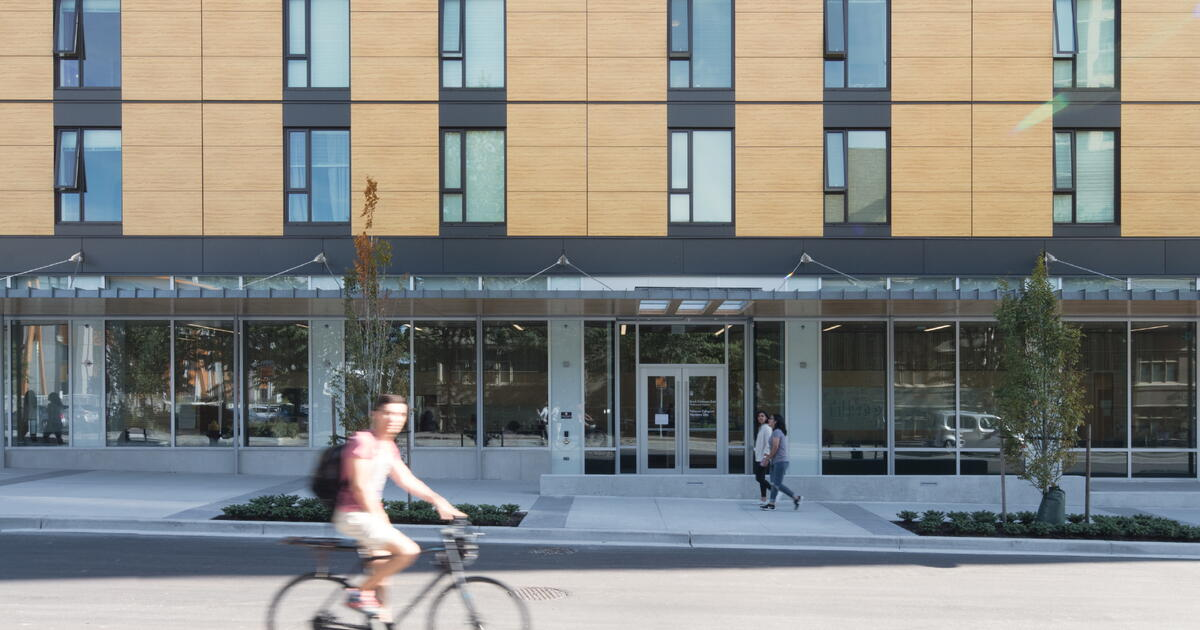
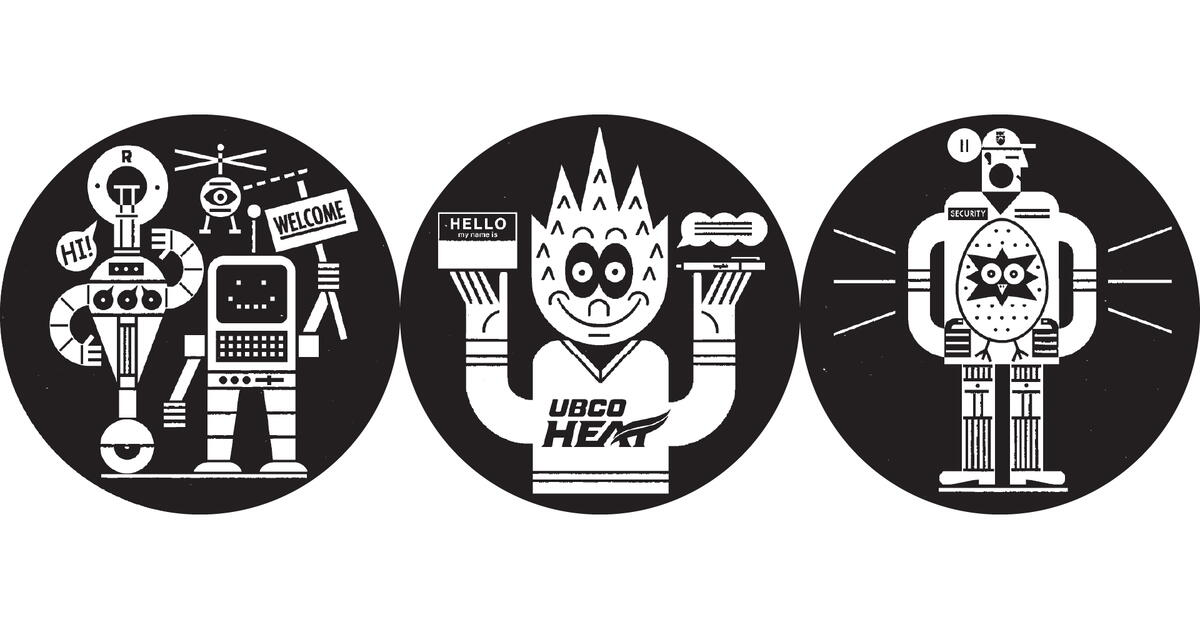
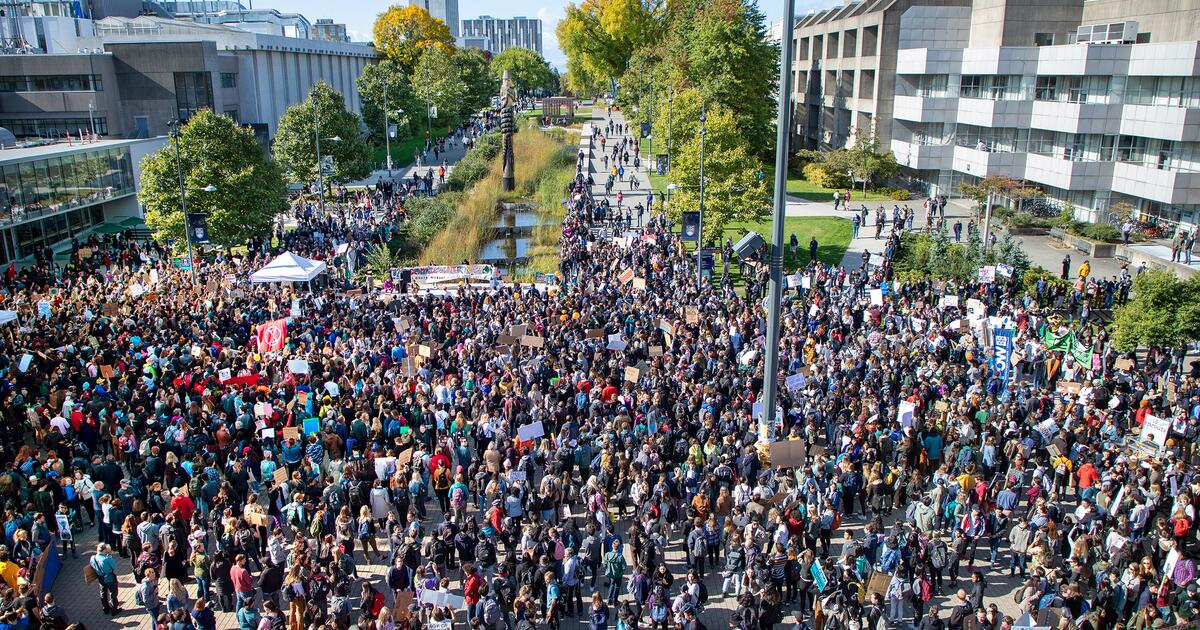
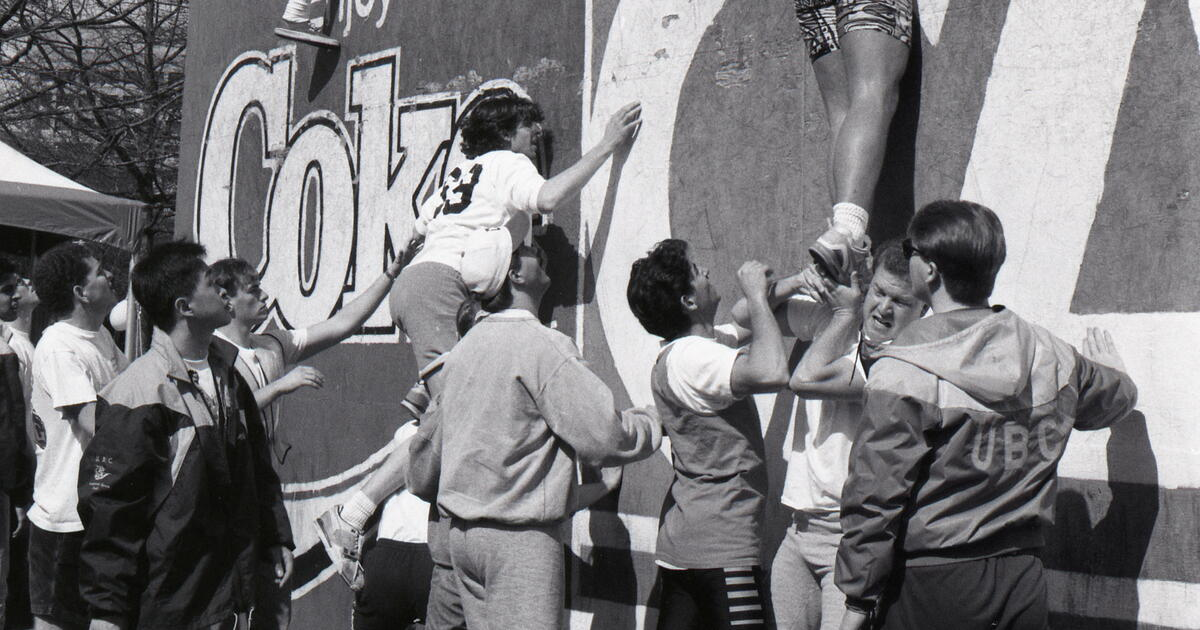
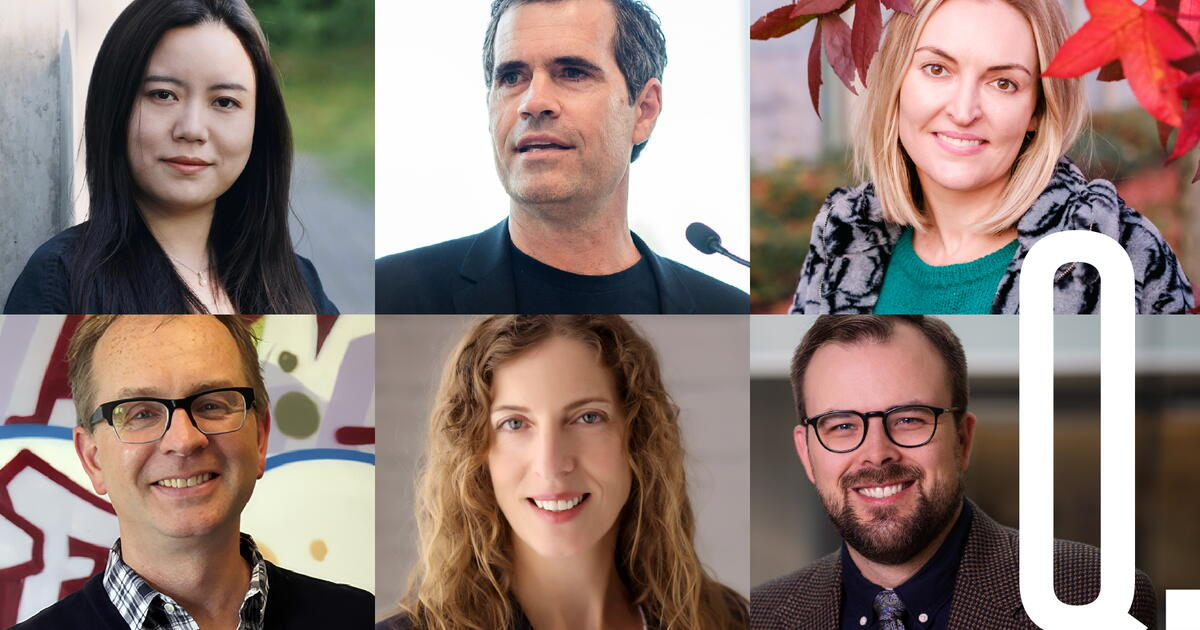
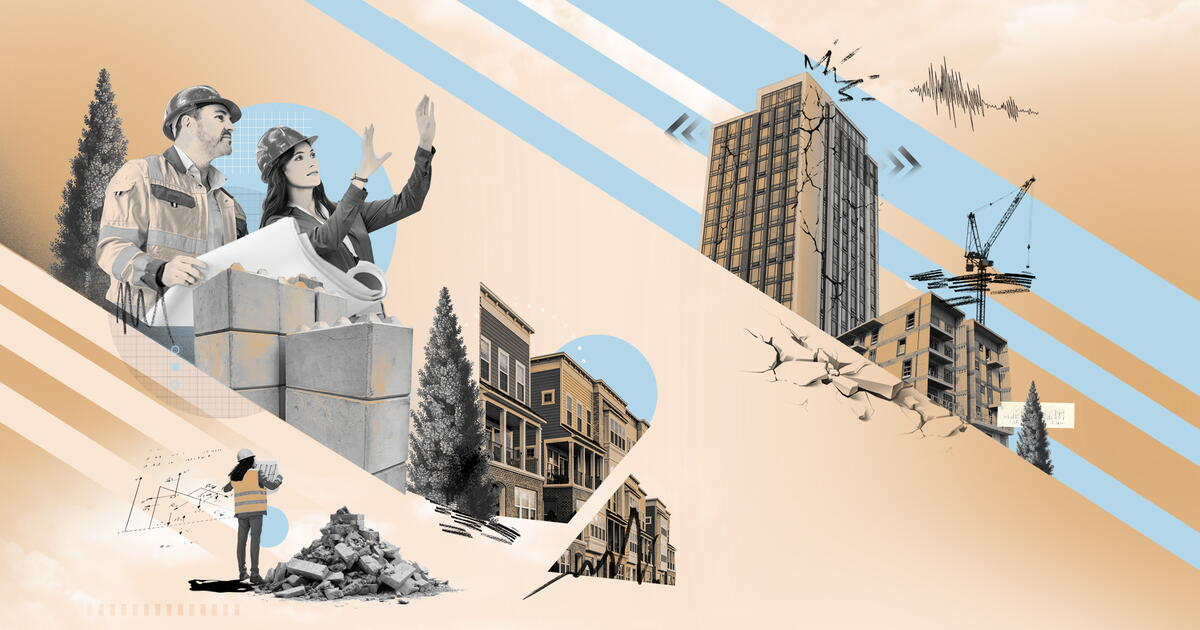
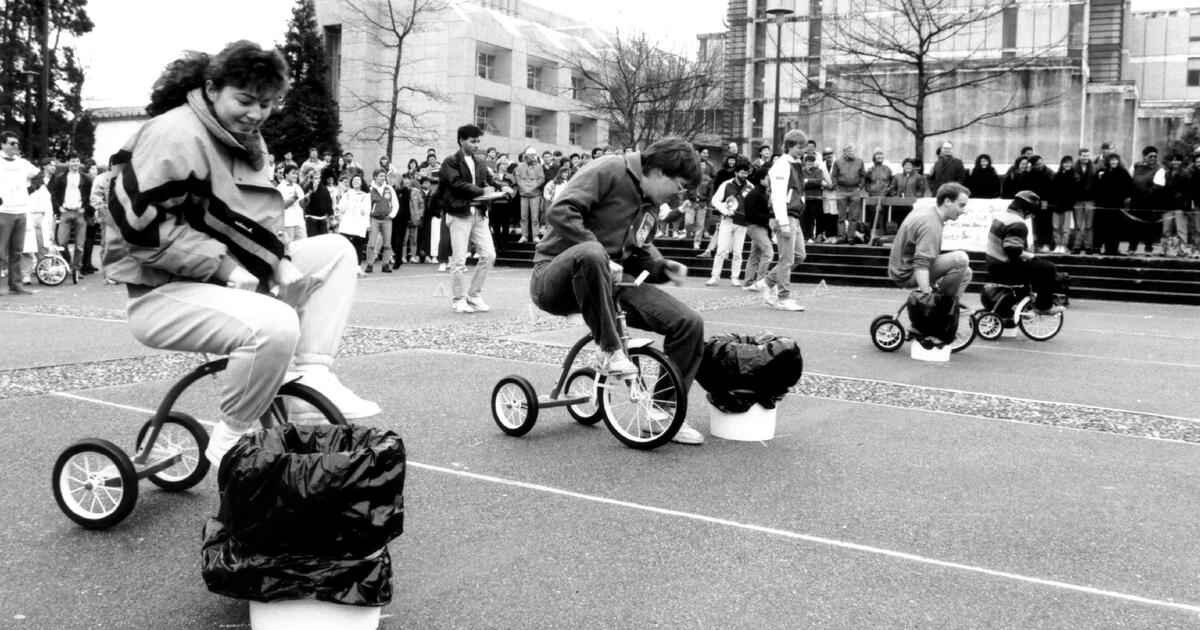
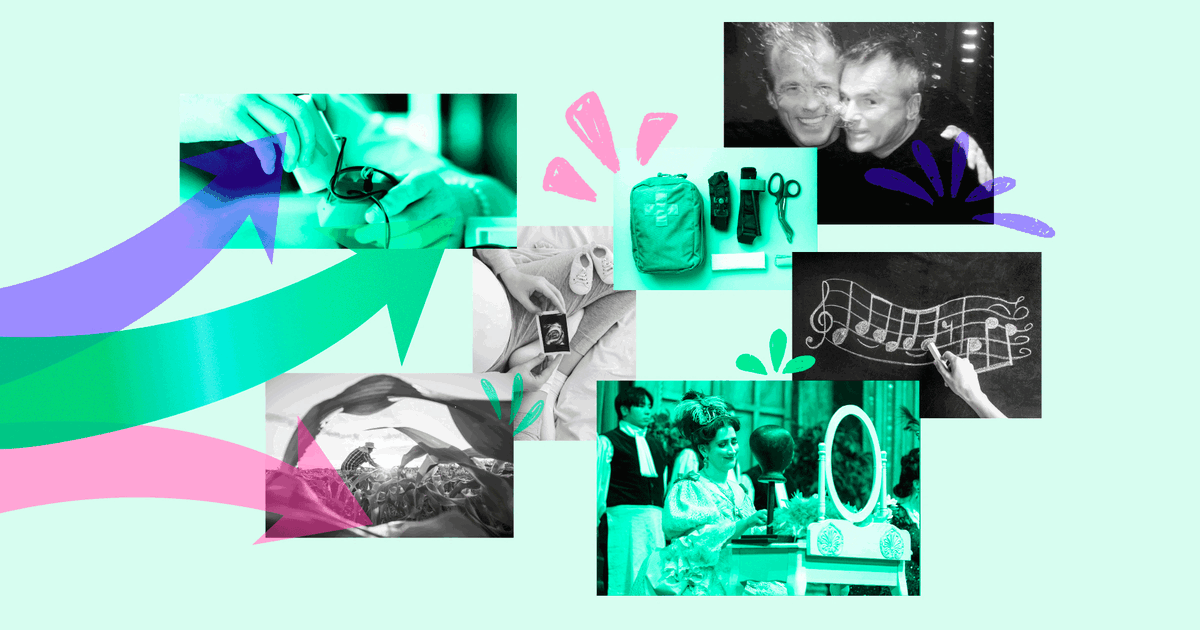
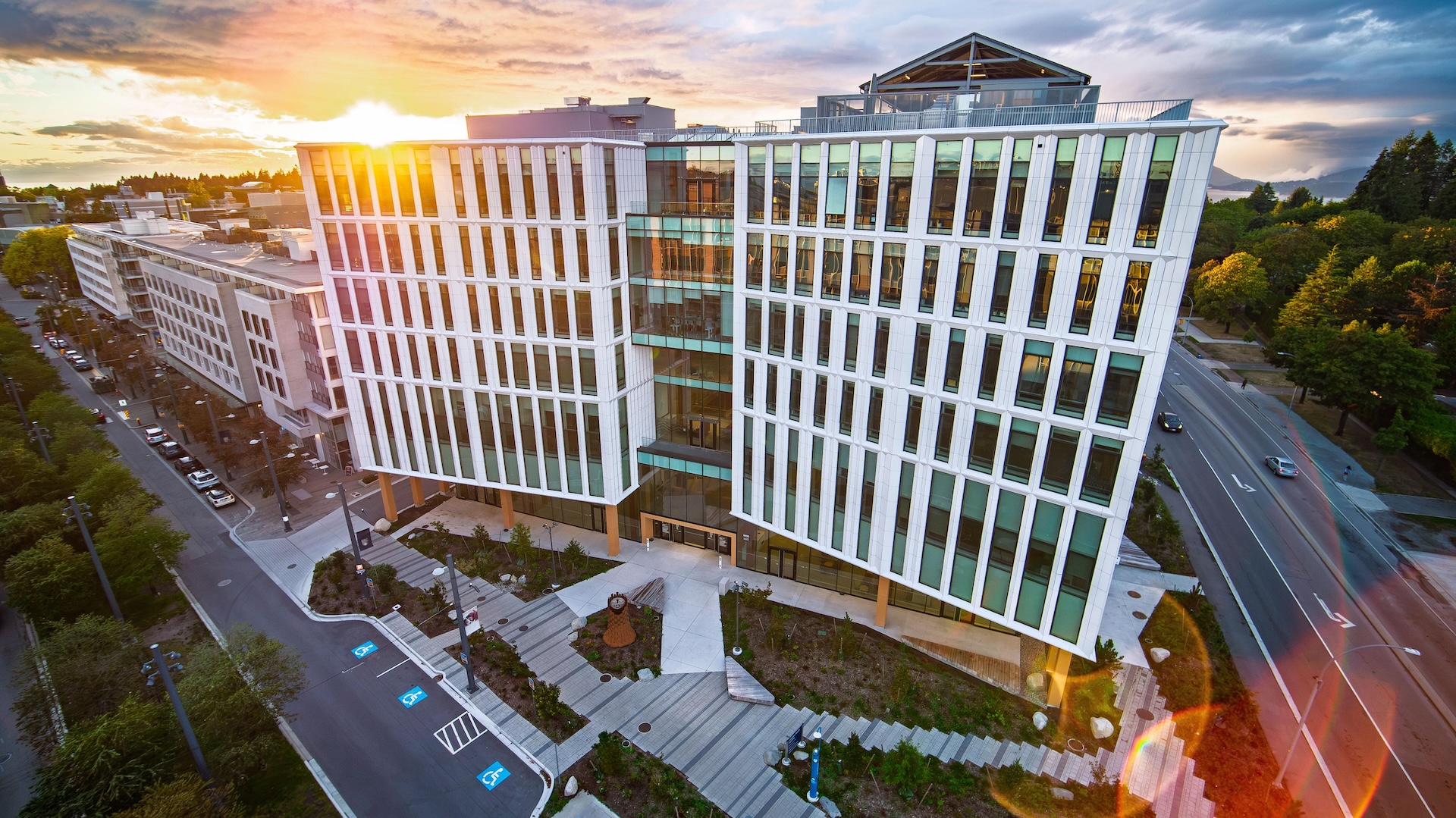
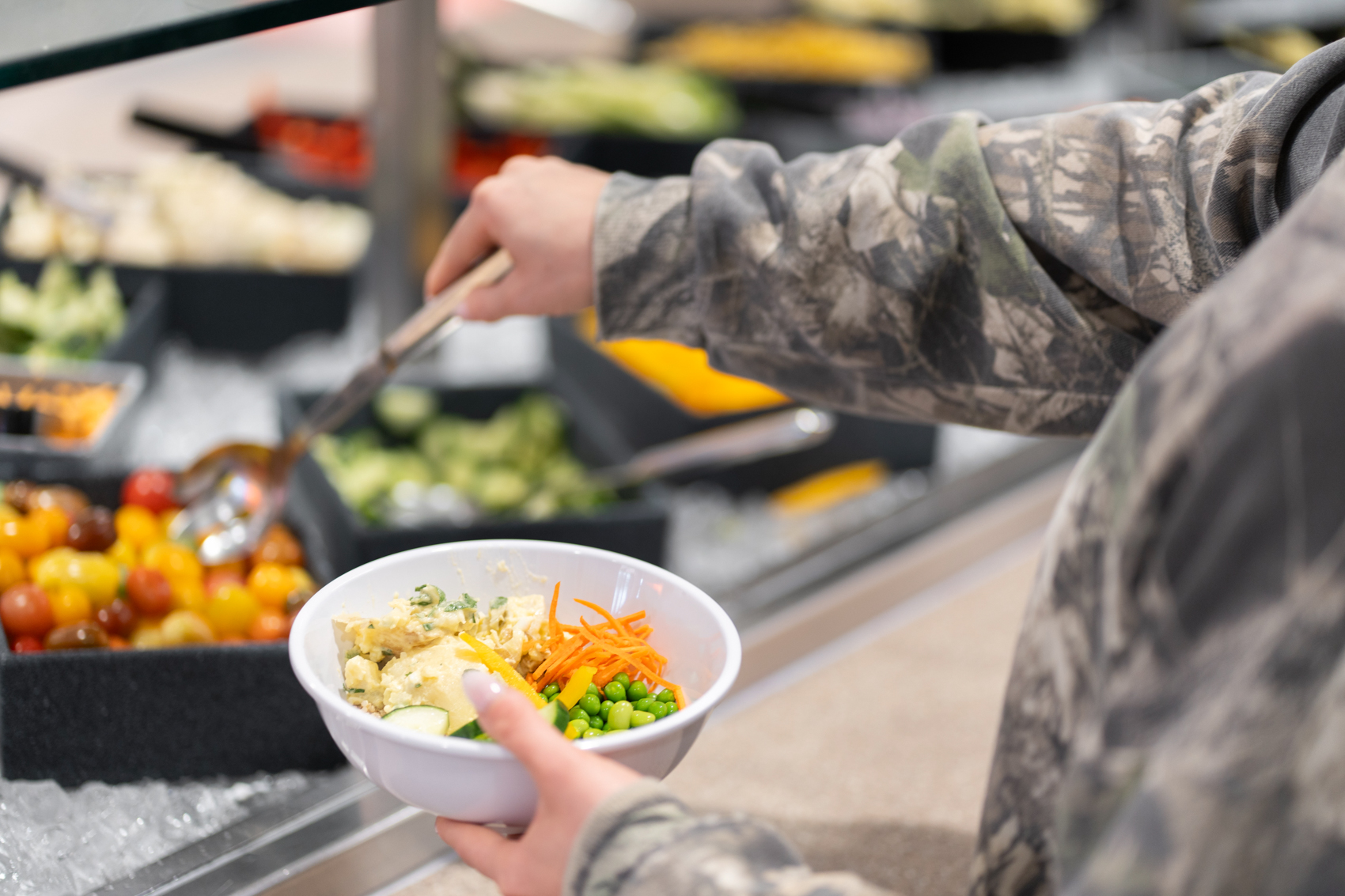
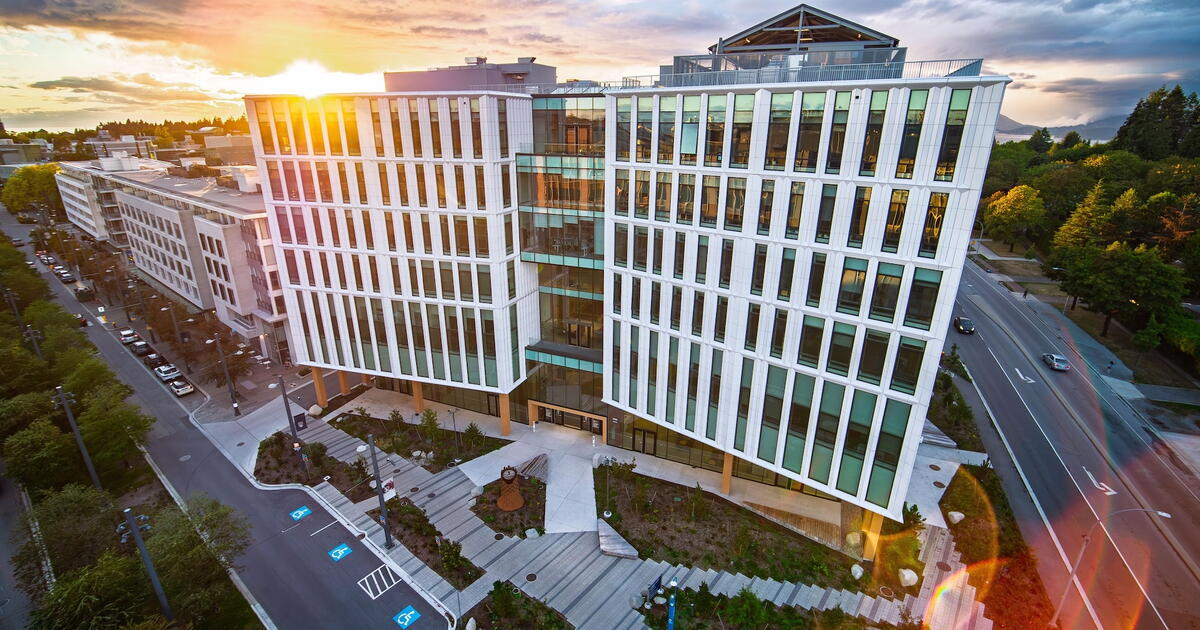
Current campus, future construction and a recognizable UBC symbol: a small visual pause before the stories continue.
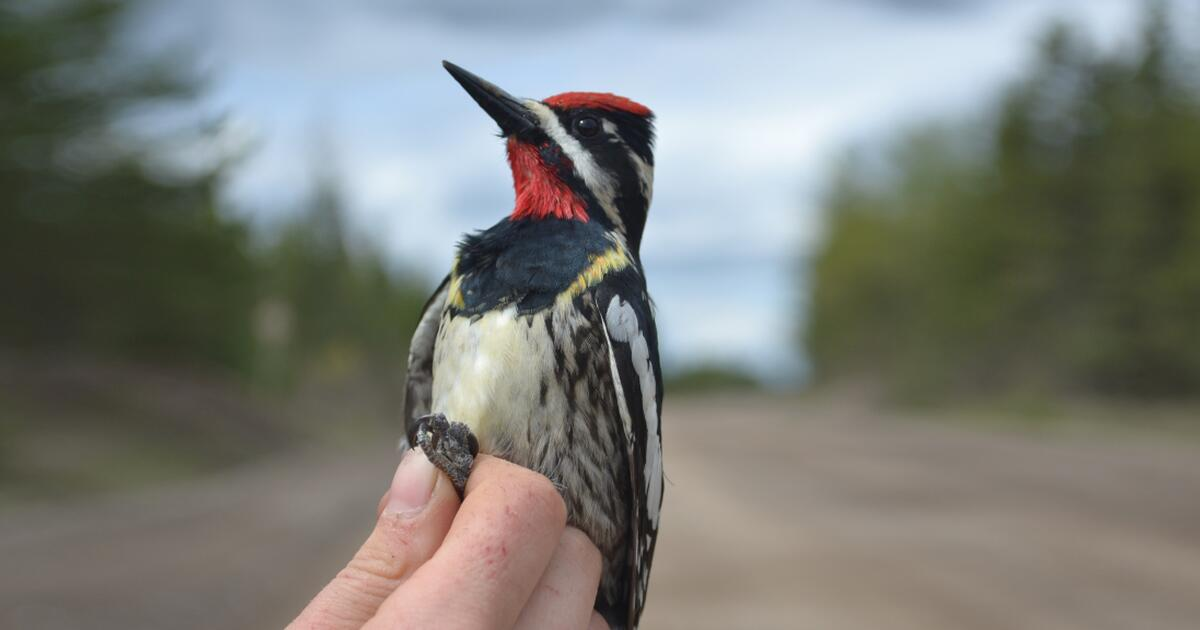
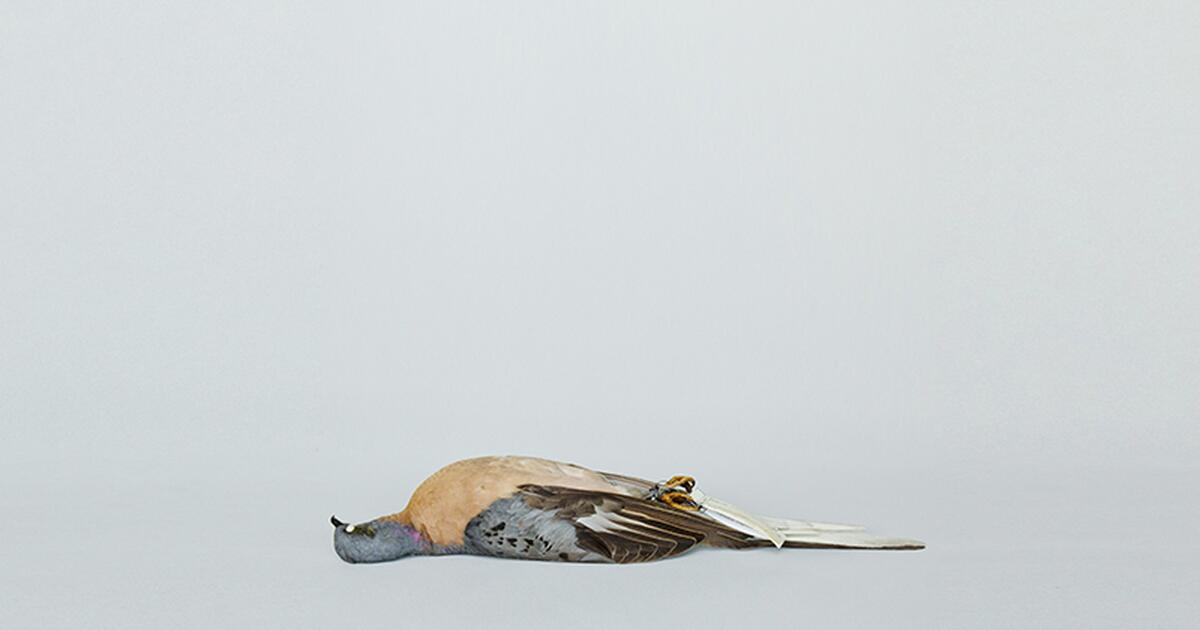
How to Catch a WoodpeckerSource image and credit remain with magazine.alumni.ubc.ca; reuse permission is unverified.
01 / 882020-06-01
best-of-2010-2020
How to Catch a Woodpecker
A UBC undergraduate heads for the wilderness armed with a giant net, a plumbing camera, and gallons of bug spray.
Original reporting by Richard Littlemore
Anyone rummaging through Jamie Clarke’s kitchen in search of a snack might encounter a crunchy surprise: there are insects in the freezer. The 22-year-old biology major began collecting bugs after an entomology course at UBC -- not to eat them, but to examine and identify them. Clarke finds the prized samples around her family’s Vancouver apartment, which (to the mild chagrin of her parents) often doubles as both home and lab storage. Like the freezer, the patio has been commandeered for science: lounge chairs vie for space with bags of seaweed for a project and the carcass of a beached bird carried home to identify for a survey.
Clarke’s scientific inclinations admittedly present some challenges to the creeds of Martha Stewart Living, but her intrepid love for biology is a lifestyle in its own right. “I have a lot of questions about the natural world,” says Clarke. “I want to know the names of the living things I see, how they came to be, how they’re related to one another, how they depend on one another, how they work. Biology is just really cool; I think I’ve always wanted to study it.” Taking her curiosity beyond the classroom, Clarke looks for jobs that feed her fascination.
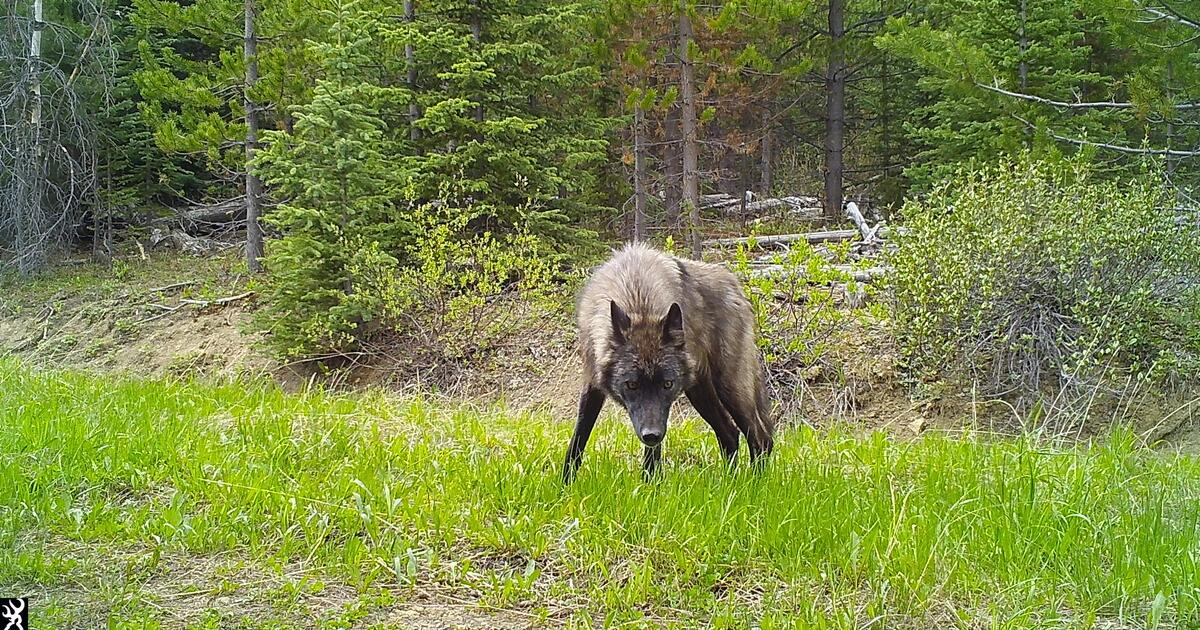
Hidden Cameras Monitor WildlifeSource image and credit remain with magazine.alumni.ubc.ca; reuse permission is unverified.
02 / 882020-11-24
fall-2020
Hidden Cameras Monitor Wildlife
The Research: Forestry professor Cole Burton and Robin Naidoo, adjunct professor at the Institute for Resources, Environment and Sustainability, are observing how human activity is affecting wildlife in protected areas. Bottom Line: Wildlife avoids areas recently visited by humans. The COVID-19 pandemic has fired up interest in outdoor activities in our parks and forests. Now a new UBC study highlights the need to be mindful of how these activities may affect wildlife living in protected areas.
Original reporting by Richard Littlemore
Motion-activated cameras are monitoring wildlife presence on the trails in and around BC’s South Chilcotin Mountains Provincial Park. Photo: Robin Naidoo
Forestry professor Cole Burton and Robin Naidoo, adjunct professor at the Institute for Resources, Environment and Sustainability, are observing how human activity is affecting wildlife in protected areas.
Lives on the LineSource image and credit remain with magazine.alumni.ubc.ca; reuse permission is unverified.
03 / 882020-11-24
fall-2020
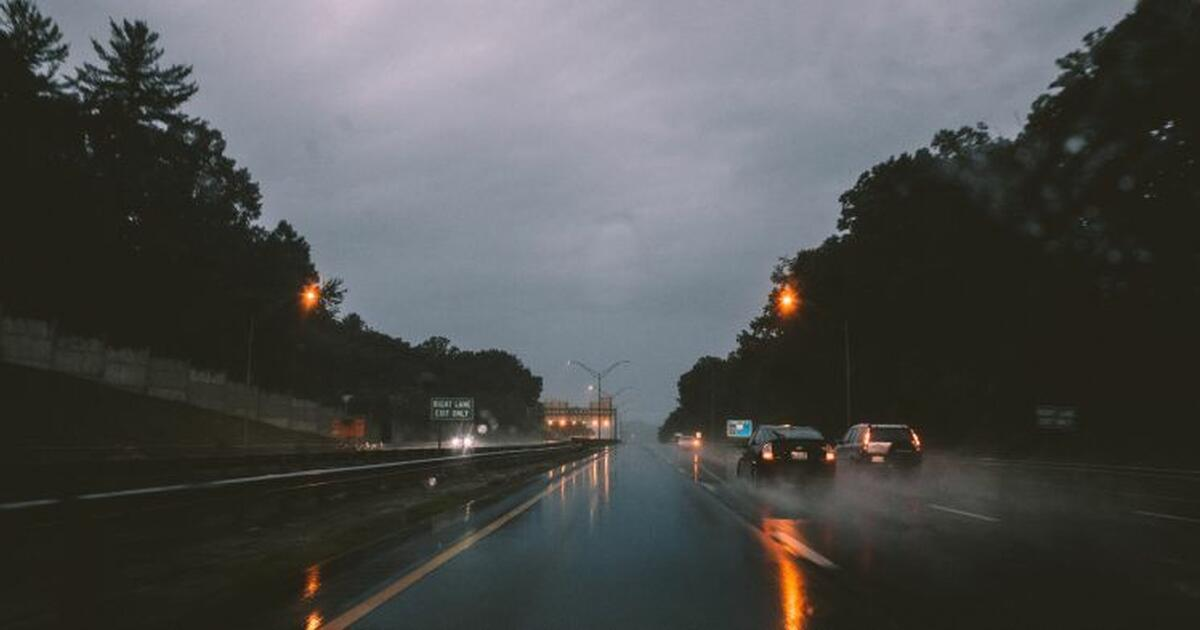
Lives on the Line
The Research: Civil engineering professor Tarek Sayed explored how the size of road markings affects collision rates. Bottom Line: Increasing the width of road markings substantially reduces collisions. Making pavement markings two to four inches wider can significantly reduce collisions on Canadian highways, new research from the UBC, the University of Alberta and McMaster University suggests.
Original reporting by Richard Littlemore
Civil engineering professor Tarek Sayed explored how the size of road markings affects collision rates.
Increasing the width of road markings substantially reduces collisions.
Survival OddsSource image and credit remain with magazine.alumni.ubc.ca; reuse permission is unverified.
04 / 882020-11-24
fall-2020
Survival Odds
The Research: Dr. Brian Grunau of UBC’s department of Emergency Medicine led a study to compare survival rates of cardiac arrest patients treated at the scene with those of patients transported to hospital. Bottom Line: The chances of surviving a cardiac arrest among patients transported to hospital are slim compared to those treated at the scene. If someone experiences cardiac arrest—a condition in which the heart suddenly stops beating—what’s the best way to keep that person alive?
Original reporting by Richard Littlemore
Dr. Brian Grunau of UBC’s department of Emergency Medicine led a study to compare survival rates of cardiac arrest patients treated at the scene with those of patients transported to hospital.
The chances of surviving a cardiac arrest among patients transported to hospital are slim compared to those treated at the scene.
Elasmosaurus skeletonSource image and credit remain with magazine.alumni.ubc.ca; reuse permission is unverified.
05 / 882020-12-03
spring-2019
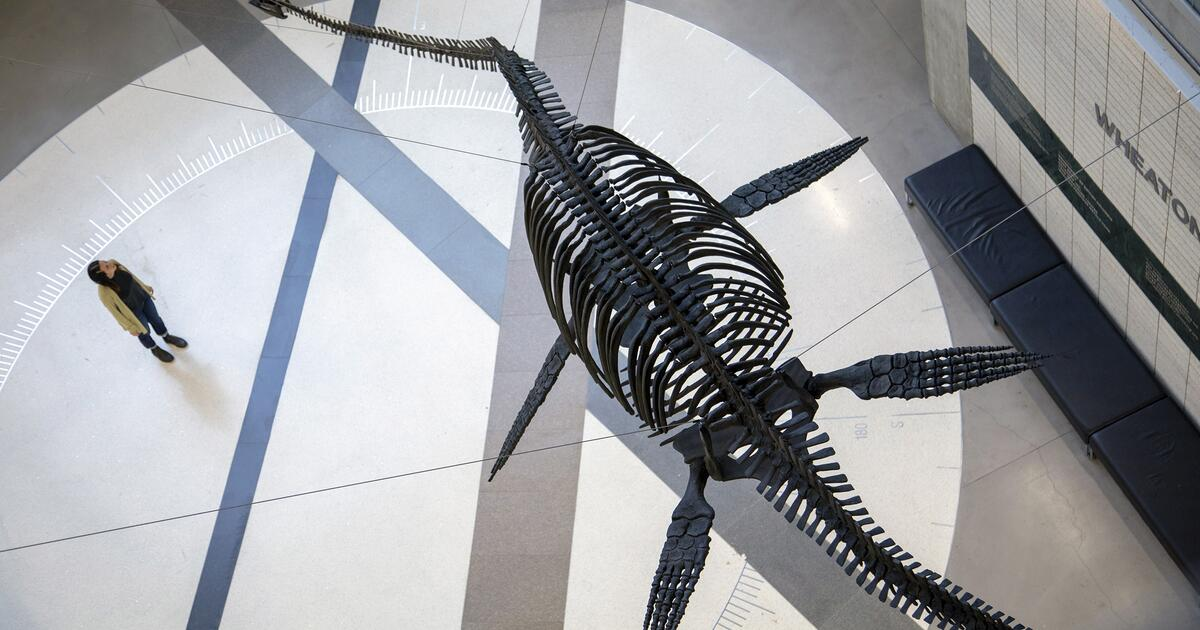
Elasmosaurus skeleton
UBC’s Earth Sciences building has gained a 13-metre-long occupant.
Original reporting by Richard Littlemore
“We hope to ignite a sense of amazement and curiosity in visitors as they imagine this majestic sea creature swimming through a Cretaceous sea.”
Last September, UBC’s Earth Sciences building gained a 13‑metre‑long occupant when the cast of an Elasmosaurus skeleton was suspended in the glass atrium as a permanent installation of the Pacific Museum of Earth. (The museum already houses a Lambeosaurus skeleton – a duck‑billed, hooded dinosaur – and Canada’s largest blue whale skeleton is installed at UBC’s Beaty Biodiversity Museum.) In case your Elasmosaurus knowledge is spotty, here are a few facts you can casually drop into your next conversation about Late Cretaceous creatures:
A new UBCO degree is part of a much longer language story
4Inaugural graduates / people
<50Fluent-speaker context / reported speakers
UBC describes four inaugural graduates from the Bachelor of St’át’imc Language Fluency degree, in a context where fewer than 50 fluent speakers remain. The figures describe a cohort and a reported context, not a recovery rate.
Source: UBC Magazine Small-cohort count and speaker context; no causal or population-level conclusion is implied.
Beyond diversitySource image and credit remain with magazine.alumni.ubc.ca; reuse permission is unverified.
08 / 882021-06-28
spring-2021
Beyond diversity
A welcoming and inclusive workplace requires a willingness to change the status quo.
Original reporting by Richard Littlemore
Improving employee diversity has often been pushed as the cure-all for creating equitable and inclusive workplaces. And yet when people are hired into a new workplace, they are often expected to assimilate to its cultural norms. The challenge is that while the creation of a diverse workforce is a positive step, it takes more to create a workplace culture in which all employees can thrive.
A stitch in timeSource image and credit remain with magazine.alumni.ubc.ca; reuse permission is unverified.
09 / 882021-07-02
spring-2021
A stitch in time
The pandemic has spawned a sewing surge and a chance to rediscover the practical arts.
Original reporting by Richard Littlemore
United Kingdom Prime Minister Boris Johnson sent Britons Googling this past fall when he said “a stitch in time saves nine” to describe actions to prevent the spread of COVID-19. The phrase means it’s better to spend a little time solving a little problem now to prevent spending more time on a bigger problem later. As the BBC reported, it’s a sewing reference that can be traced back to 1723.
Robby the robotSource image and credit remain with magazine.alumni.ubc.ca; reuse permission is unverified.
11 / 882021-11-25
fall-2021
Robby the robot
The newest member of UBC’s Athletics & Recreation team is a line-painting robot.
Original reporting by Richard Littlemore
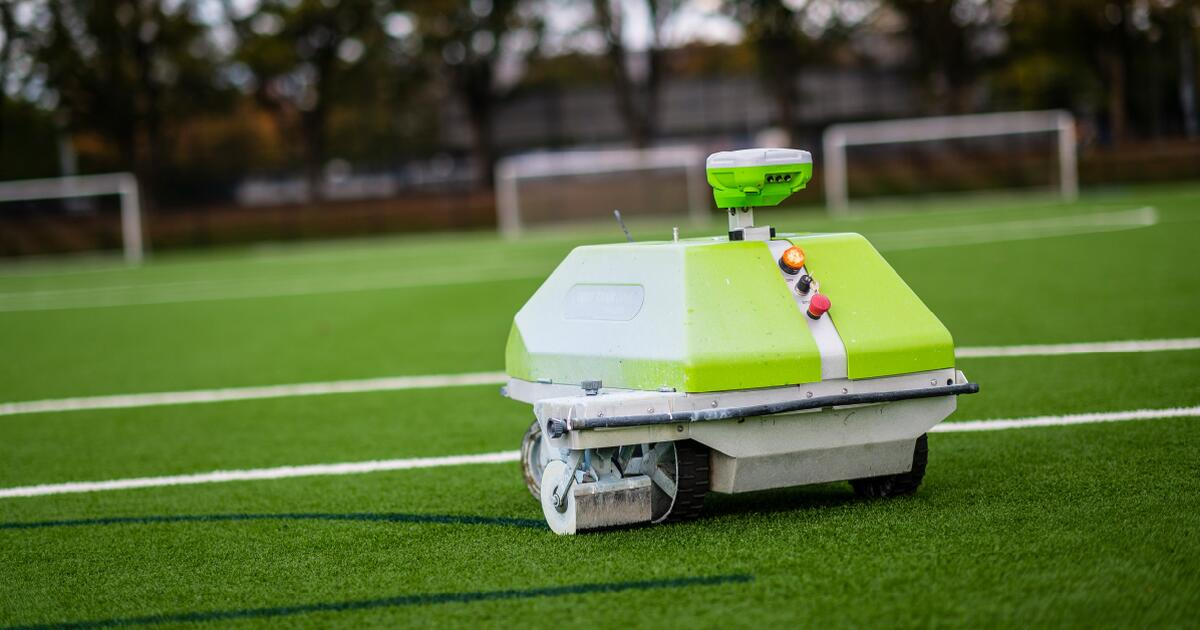
The newest member of UBC’s Athletics & Recreation team is an autonomous line-painting robot, known to his colleagues as Robby. Robby may not be very talkative, but he paints lines with the precision of a master — using GPS to create sports field pitches in a fraction of the time it would take a team of several people, and using less paint. The first of his kind in Canada, Robby can even be programmed for logos.
“Robby and I have the closest relationship, and I do refer to him like he is a co-worker,” says groundskeeper Andre Dionne. “There are days when we don’t get along, mostly because he glitches and doesn’t connect to the satellite transmitter or loses Wi-Fi connection, but I’ll still take him on his bad days. With Robby on the team, we’re able to focus more on sports field maintenance and irrigation repairs, or ongoing tasks, like mowing, weeding, and line trimming.”
UBC says nine of the 64 chairs in the first round will join the university, eight at Vancouver and one at Okanagan.
Source: UBC News Institutional announcement; chair appointments unfold over time.
Want a successful career?Source image and credit remain with magazine.alumni.ubc.ca; reuse permission is unverified.
12 / 882021-11-25
fall-2021
Want a successful career?
Commit to learning every day.
Original reporting by Richard Littlemore
Martina Valkovicova (MBA’11) is assistant dean and director for the Hari B. Varshney Business Career Centre at UBC Sauder.
If you read reports on the skills employers consider most desirable, you won’t fail to notice that critical thinking and (complex) problem solving are almost always mentioned. These two specific sets of skills have appeared in reports for decades, and I do not believe they will go anywhere anytime soon.
Saving the world, one bubble at a timeSource image and credit remain with magazine.alumni.ubc.ca; reuse permission is unverified.
13 / 882021-11-26
spring-2021
Saving the world, one bubble at a time
The most widely used COVID vaccine relies on a novel drug delivery system developed at UBC.
Original reporting by Chris Cannon
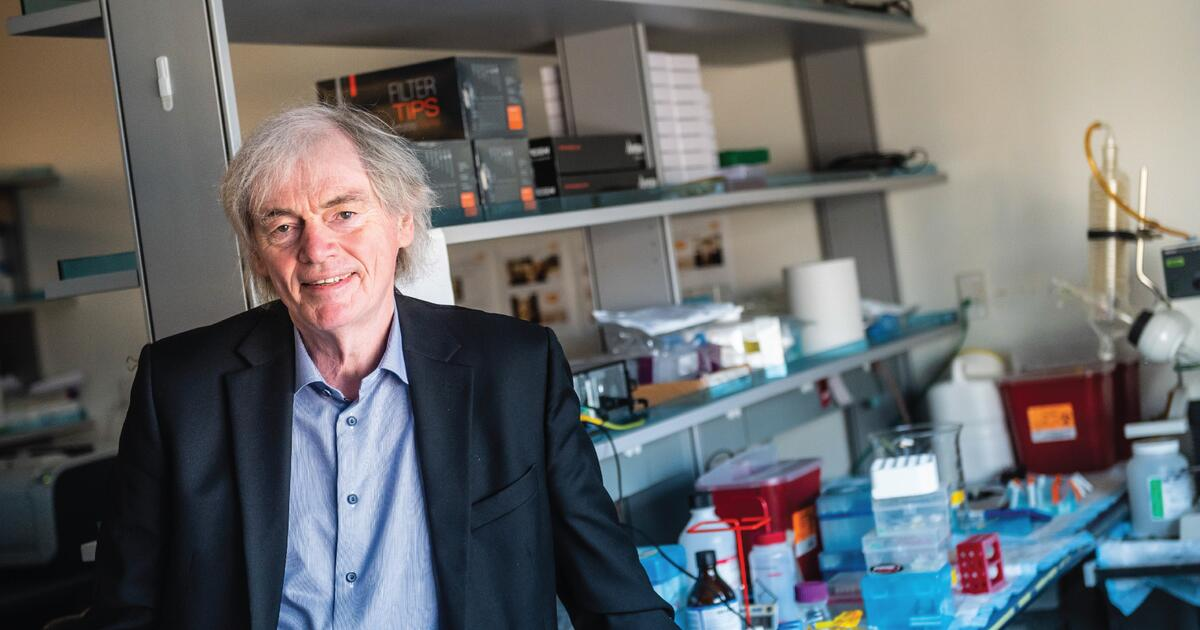
On a chilly morning in late March, 2021, Dr. Pieter Cullis left his lab on the fifth floor of UBC’s Health Sciences Building, took an elevator to ground level, and crossed the street to the COVID-19 vaccination clinic in Pharmaceutical Sciences. There was nothing outwardly remarkable about this brief walk, yet to 75-year-old Cullis it felt like the journey of a lifetime.
It’s not too late to save the night sky...Source image and credit remain with magazine.alumni.ubc.ca; reuse permission is unverified.
14 / 882021-12-01
fall-2021
It’s not too late to save the night sky...
We shouldn’t have to make a choice between the night sky and global internet.
Original reporting by Richard Littlemore
In early 2021, just after the Perseverance Rover landed on Mars, a purported image of the Martian night sky went viral. In that image, above the sleek metal of a Mars rover, the clearly defined Milky Way cuts from horizon to horizon, crossing a sky filled with so many stars that there is no darkness.
Millions of people were excited to see the unblemished night sky from another planet, with no light pollution from cities, no flashing aircraft and no significant satellite presence.
alumni UBC describes a community of more than 435,000 members in 145+ countries.
This is a membership footprint, not a count of readers, event attendees or active contributors.
Source: alumni UBC homepage Published homepage statement observed on 2026-09-19; the denominator and time series are not provided.
The gathering placeSource image and credit remain with magazine.alumni.ubc.ca; reuse permission is unverified.
16 / 882022-06-10
spring-2022
The gathering place
Communities are shaping their public spaces into social places.
Original reporting by Richard Littlemore
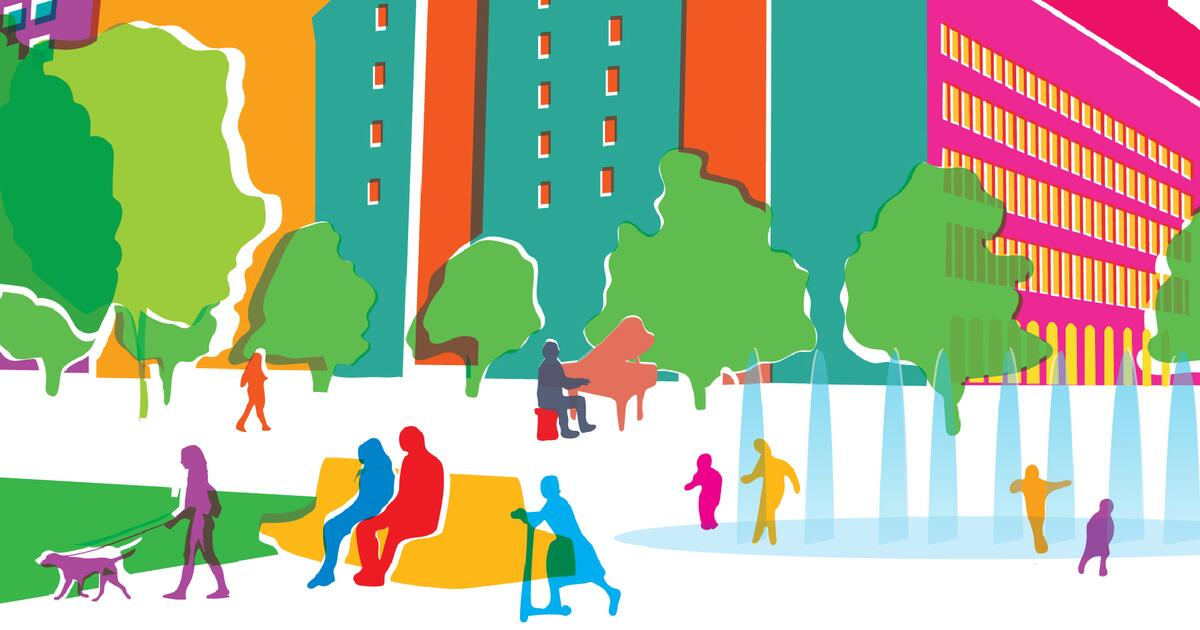
The Ancient Greeks called it the agora – “the gathering place” – a large, public venue that served as an anchor for the local populace to interact, a predecessor to the more contemporary notion of the town square. A hub of economic, political, and social activity, the agora was the heartbeat of the city-state, where one might indulge in a concert, an exhibition, a vote, a protest, a grocery pickup, and a philosophical debate all over the course of an evening stroll. The anxiety disorder agoraphobia – which keeps sufferers locked in their homes with the curtains drawn – literally means “fear of the gathering place.”
The ideal city?Source image and credit remain with magazine.alumni.ubc.ca; reuse permission is unverified.
17 / 882022-06-10
spring-2022
The ideal city?
There may be no such thing, but Vancouver has shown the world an admirable model.
Original reporting by Richard Littlemore
A photograph of Vancouver taken from a helicopter above the Stanley Park area. It shows West Georgia Street, with False Creek and Science World at the end, and East Vancouver in the background. Photo: Jeremy Lee (@jw.klee)
There may be no such thing, but Vancouver has shown the world an admirable model.
Video Poetry: Utility PoleSource image and credit remain with magazine.alumni.ubc.ca; reuse permission is unverified.
18 / 882022-10-04
spring-2022
Video Poetry: Utility Pole
Utility Pole is based on a poem written and narrated by Vancouver’s poet laureate, Fiona Tinwei Lam, BA’86, MFA’02, and created in collaboration with Ontario poetry filmmaker Mary McDonald, MET’20. A note from the poet:
Original reporting by Richard Littlemore
Utility Pole is based on a poem written and narrated by Vancouver’s poet laureate, Fiona Tinwei Lam, BA’86, MFA’02, and created in collaboration with Ontario poetry filmmaker Mary McDonald, MET’20.
"After traipsing up and down back alleys regularly for groceries, I started noticing telephone poles, which we so often overlook. I noticed that they would often be positioned near living trees. At the time, I was writing odes to ordinary things, inspired by Pablo Neruda's Odas Elementales. The poles seemed the perfect subject to honour through poetry."
Feeding the mission to MarsSource image and credit remain with magazine.alumni.ubc.ca; reuse permission is unverified.
19 / 882022-12-08
fall-2022
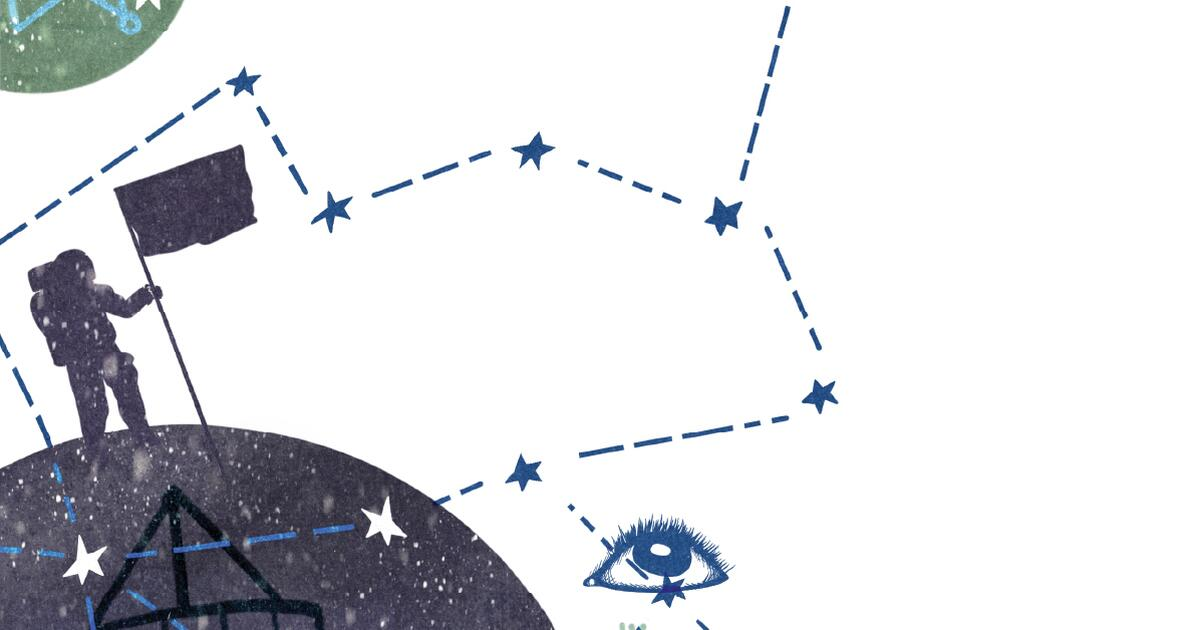
Feeding the mission to Mars
A UBC prof tackles the challenge of adequate nutrition for astronauts.
Original reporting by Richard Littlemore
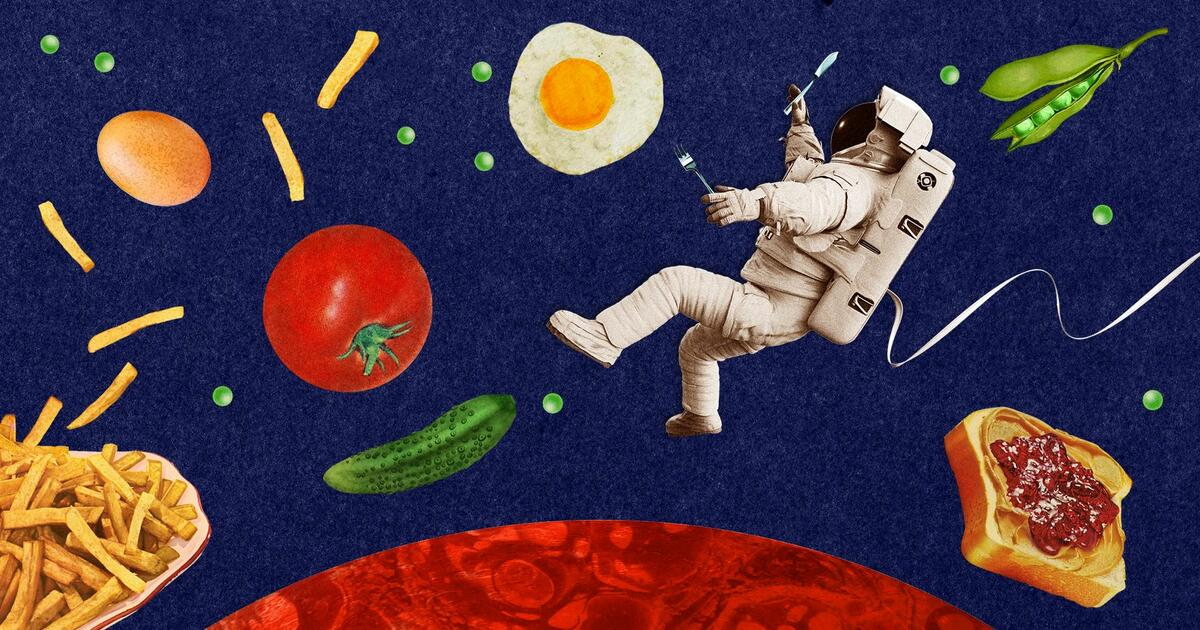
In space, no one can hear you scream. Also, the food is terrible. Due to safety protocols, astronauts have no ovens, microwaves, or stoves. They can’t fry eggs or make toast. They aren’t even allowed to boil water. If you could describe space food in one word, it would be “mushy.”
What will Martians eat?Source image and credit remain with magazine.alumni.ubc.ca; reuse permission is unverified.
20 / 882022-12-08
fall-2022
What will Martians eat?
Two food security experts explore how the first Mars colonists might feed themselves.
Original reporting by Richard Littlemore
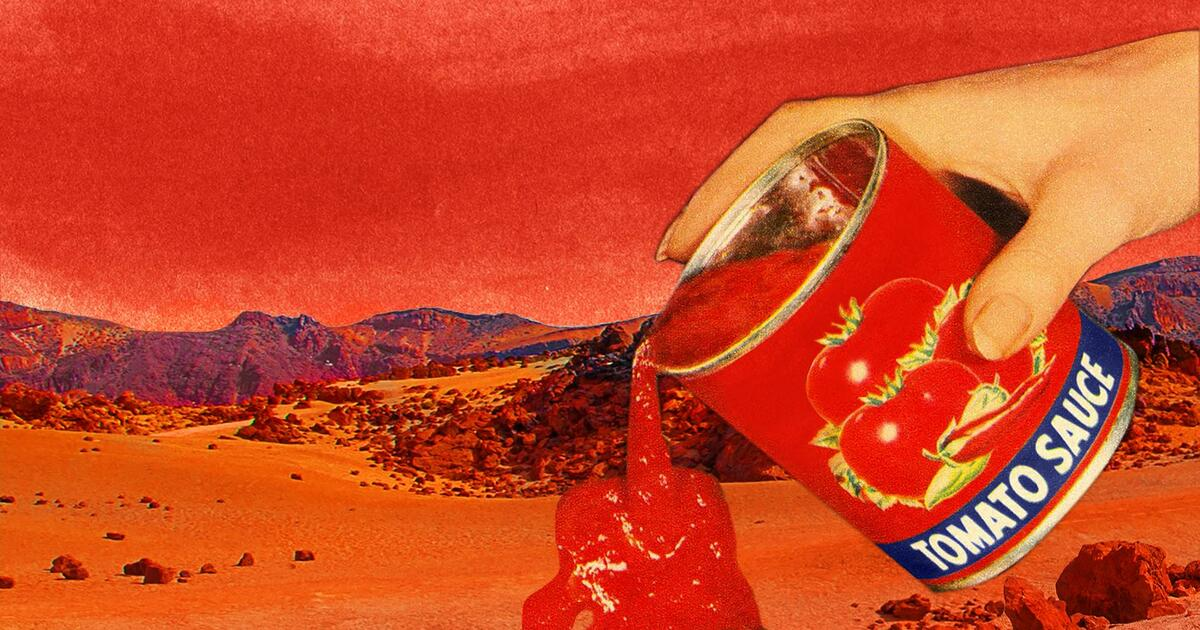
In the 2015 film The Martian, a stranded Matt Damon struggles to survive on the Red Planet by making water from scratch, building a greenhouse from duct tape, and growing potatoes in human excrement.
Should Canada dispense with its tipping culture?Source image and credit remain with magazine.alumni.ubc.ca; reuse permission is unverified.
23 / 882023-05-19
spring-2023
Should Canada dispense with its tipping culture?
Six UBC experts share their perspectives.
Original reporting by Richard Littlemore
Yes, we should get rid of tipping in Canada. Tipping tends to be a feature of interactive service work in which the service worker interacts directly with the customer, granting a degree of supervisory power to the customer. This is useful in workplaces where the service provided cannot just be standardized and dictated to the worker but rather lies in the worker’s ability to respond to the individualized needs and wants of the customer. But most of us tip habitually, not in response to service quality, and tipping amplifies the power dynamic between customer and service worker, potentially introducing pressure for the worker to cater to unreasonable or demeaning expectations and/or to reinforce social inequalities that already structure social interactions (like biases associated with race, gender, age, or body size, for example). If tipping doesn’t actually do what it is supposed to do, workers should just be paid fully for their work, and managers – not customers – should assume responsibility for service quality.
Chair in Business and Professional Ethics, Sauder School of Business; Director, W. Maurice Young Centre for Applied Ethics (SPPH)
The Gen Z effectSource image and credit remain with magazine.alumni.ubc.ca; reuse permission is unverified.
25 / 882023-11-23
fall-2023
The Gen Z effect
Advances in technology, a global pandemic, and the steep cost of living are shaping Gen Z’s experience of university – and they, in turn, are leaving their mark on campus.
Original reporting by Jared Downing
AMS president Esmé Decker in the students building, affectionately known as the Nest. Photo by Geoff Lister
Advances in technology, a global pandemic, and the steep cost of living are shaping Gen Z’s experience of university – and they, in turn, are leaving their mark on campus.
Young entrepreneursSource image and credit remain with magazine.alumni.ubc.ca; reuse permission is unverified.
26 / 882023-11-23
fall-2023
Young entrepreneurs
Raised in the digital age, independently minded, and faced with an uncertain financial future, many Gen Zers aspire to establish their own ventures.
Original reporting by Jared Downing
Statistically and anecdotally, Generation Z seems to be rising on the burbling tide of entrepreneurialism – a mostly modern mix of business discipline and optimism. And the team behind the entrepreneurship ecosystem at UBC is working across the institution to ensure that the entrepreneurial ethos and skillset, which are hard to teach, are nevertheless easy to learn.
Cole WalliserSource image and credit remain with magazine.alumni.ubc.ca; reuse permission is unverified.
28 / 882024-05-27
spring-2024
Cole Walliser
From the Pit Pub to the red carpet.
Original reporting by Richard Littlemore
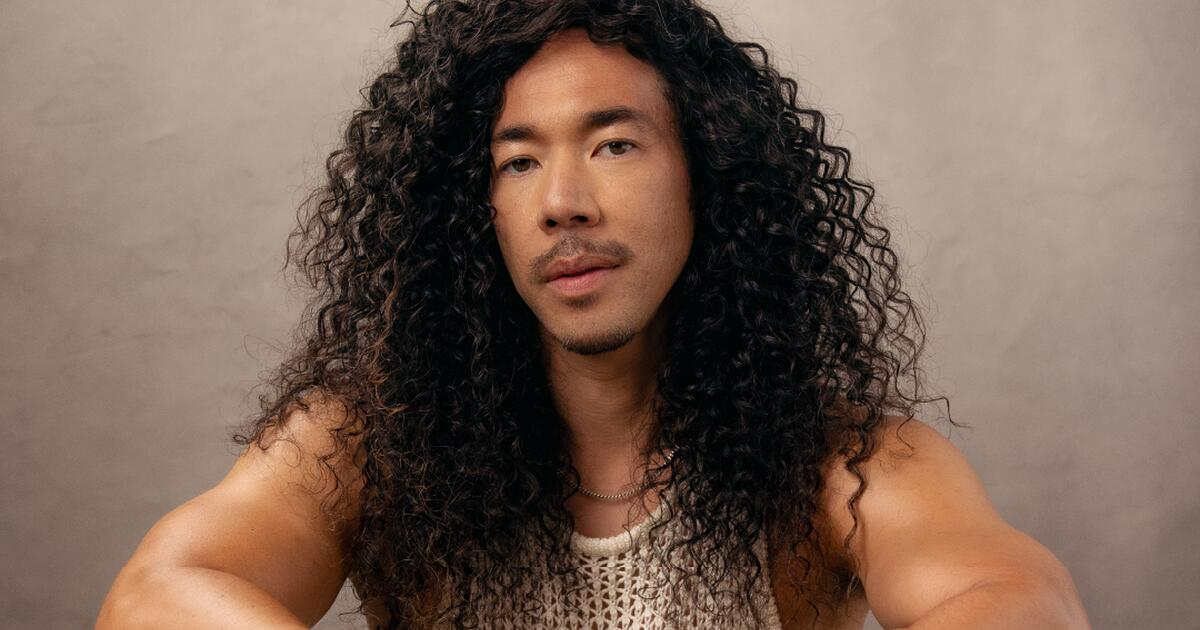
What was your nickname at school? People called me Coleone (a play on Don Corleone of The Godfather) and it stuck. At UBC, my b-boy dance name and my DJ name were both Coleone.
What was the last thing you read? A Wikipedia article on the millennial pause. (I got accused of doing a millennial pause, and I had to know what it was.)
Archive notebook / UBC place Editorial interpretation
A campus keeps its past in public
Buildings, mascots and shared rooms keep older UBC stories in circulation—and give alumni more than one way back in.
The archive stories in this issue treat campus as more than a backdrop. A gathering place, a learning exchange and a record of UBC firsts turn rooms, paths and symbols into part of the university’s collective memory.
The point is not nostalgia for its own sake. It is a reminder that an institution’s identity is made visible through the places people use, the symbols they recognize and the stories they choose to preserve.
Read as a small vintage notebook inside a September digest, these stories give the newer research and alumni profiles a physical address: Point Grey, Vancouver, Okanagan and the wider communities UBC serves.
More than a place of learningSource image and credit remain with magazine.alumni.ubc.ca; reuse permission is unverified.
31 / 882024-11-20
fall-2024
More than a place of learning
Dr. Benoit-Antoine Bacon, UBC President and Vice-Chancellor.
Original reporting by Richard Littlemore
As I wrap up my first year as UBC’s president, I might not be “the new guy” anymore, but I still remember the excitement of stepping onto campus for the first time. That feeling of starting a new adventure is one I share with the thousands of students who arrived in Vancouver and the Okanagan this September, ready to start their own journeys.
How to talk about climate changeSource image and credit remain with magazine.alumni.ubc.ca; reuse permission is unverified.
32 / 882024-11-21
fall-2024
How to talk about climate change
Facts alone are not enough. If we want to engage everyone in climate action, we need psychological strategies.
Original reporting by Jared Downing
This is where we are in the climate emergency. The data is in. The facts are incontrovertible. There’s no denying that we’re in a crisis of our own making. We (in the Global North particularly) consume too much and waste too much, and unless we pivot en masse to more sustainable energy choices – quickly, and definitively – our very survival as a species is on the line.
Alumni support for nursing education, research and clinical learning
$40MGift / CAD
The MacIsaac gift is described as the largest ever to a Canadian school of nursing. Its future effect remains a delivery and outcomes question, not a result already measured.
Source: UBC News Announced gift value; future outcomes are not yet established.
Why the rich are getting richerSource image and credit remain with magazine.alumni.ubc.ca; reuse permission is unverified.
34 / 882025-05-21
spring-2025
Why the rich are getting richer
And how a widening wealth gap is damaging democracy.
Original reporting by Richard Littlemore
Why the rich are getting richer is included as a short source-linked brief in the September edition.
How to fight disinformationSource image and credit remain with magazine.alumni.ubc.ca; reuse permission is unverified.
35 / 882025-05-22
spring-2025
How to fight disinformation
It’s nothing new, says historian of media, and we can learn from the past.
Original reporting by Richard Littlemore
Following the Arab Spring uprisings of the early 2010s, there was a flood of optimism about social media’s potential to unleash democracy around the world. “If you want to liberate a society, just give them the Internet,” said activist and Google executive Wael Ghonim after Egypt’s Mubarak regime was toppled. Many believed that Facebook, Twitter, and other digital platforms would amplify marginalized voices and hold the powerful accountable.
Democracy: Down, but not outSource image and credit remain with magazine.alumni.ubc.ca; reuse permission is unverified.
36 / 882025-05-23
spring-2025
Democracy: Down, but not out
Despite the backsliding, public support for democracy remains strong.
Original reporting by Richard Littlemore
People rallied at the Michigan State Capitol in February to oppose the US administration – one of many similar protests held across the US. (Photo by: Jim West/UCG/Universal Images Group via Getty Images)
Despite the backsliding, public support for democracy remains strong.
Born to ageSource image and credit remain with magazine.alumni.ubc.ca; reuse permission is unverified.
39 / 882025-11-20
fall-2025
Born to age
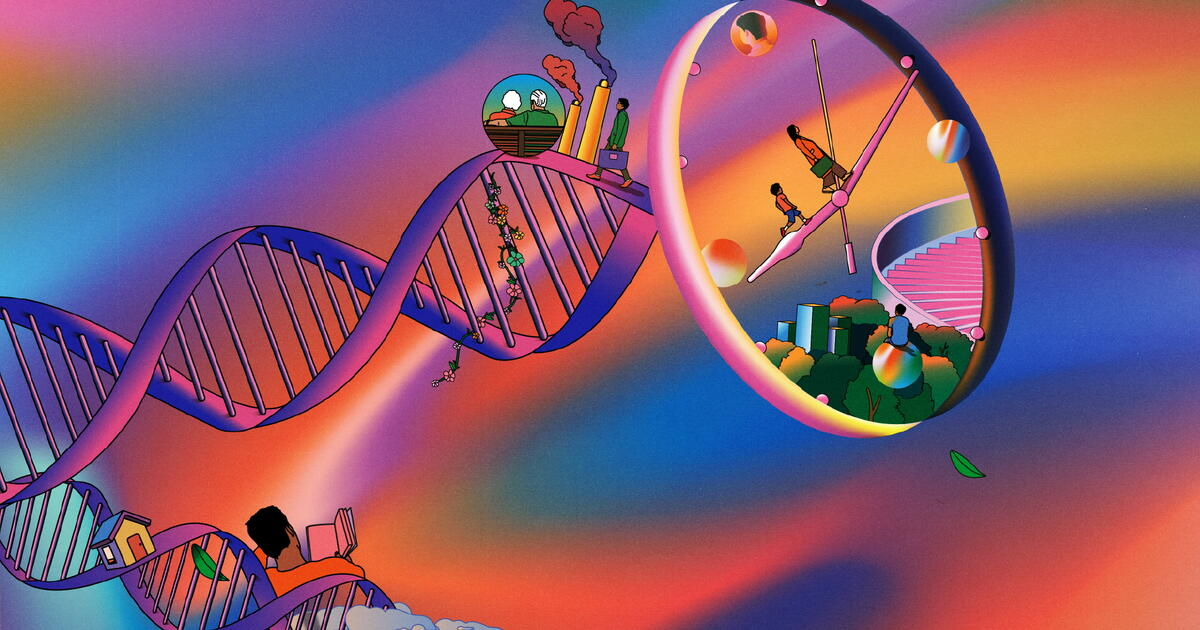
We can’t stop the clock, but our life experiences influence how fast it ticks—and how long we stay healthy.
Original reporting by Kerry Blackadar, BA’07, MJ’10
For most of human history, aging was an inevitable and inscrutable process—a slow unravelling that began after reaching adulthood and ended, if you were lucky, somewhere north of your 40s. And while today’s generations can expect to live a good deal longer, those extra years are not necessarily healthy ones.
Understanding concussion: What parents and young athletes need to knowSource image and credit remain with magazine.alumni.ubc.ca; reuse permission is unverified.
40 / 882025-12-08
athletics-health
Understanding concussion: What parents and young athletes need to know
UBC sports injury expert (and hockey mom) Dr. Shelina Babul tackles common myths about this brain injury.
Original reporting by Tyler Stiem, MFA’17
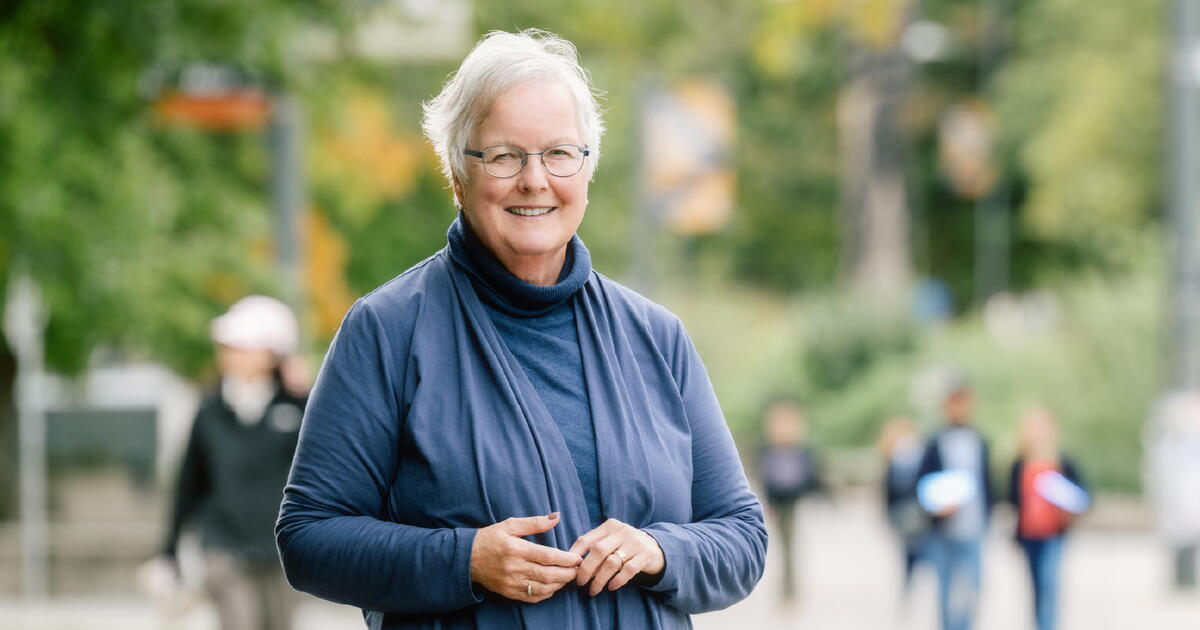
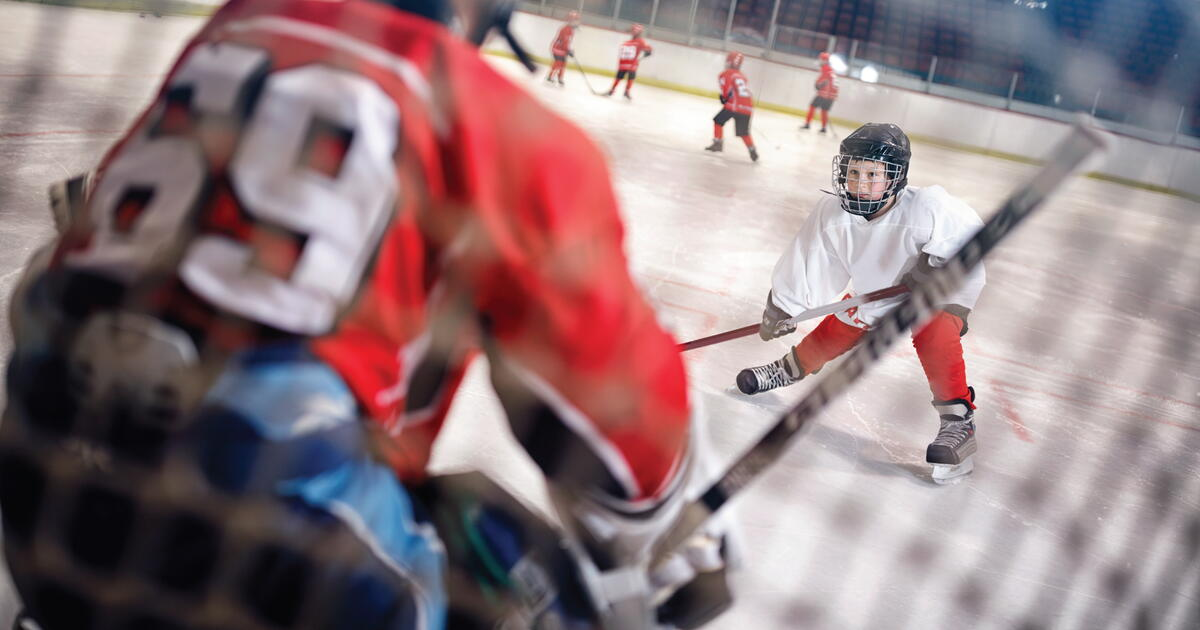
As young hockey players lace up for another season on the ice, Dr. Shelina Babul (BSc’91, PhD’01), clinical professor in the UBC Department of Pediatrics and director of the BC Injury Research and Prevention Unit, has some words of advice: wear your helmets and mouthguards—and don’t take your brain for granted.
Model homesSource image and credit remain with magazine.alumni.ubc.ca; reuse permission is unverified.
41 / 882026-04-29
spring-2026
Model homes
The Point Grey campus is often described as a “living lab,” and its advanced residential builds are no exception. The novel designs and materials piloted at UBC are leading the way for a new era of sustainable housing.
Original reporting by Chris Cannon
In 2017, UBC set a record for the tallest hybrid timber structure in the world. Standing 18 storeys high and constructed mostly of prefabricated wood, Brock Commons Tallwood House was designed to prove a point: that sustainable timber can replace the vast majority of the steel and concrete typically used in towers. With Brock Commons as proof of concept, even taller timber buildings have since sprouted up across the world.
What might become standard for future homes that isn’t common today?Source image and credit remain with magazine.alumni.ubc.ca; reuse permission is unverified.
42 / 882026-04-29
spring-2026
What might become standard for future homes that isn’t common today?
One pressing question, multiple expert perspectives.
Original reporting by Chris Cannon
Associate Professor, Department of Forest Resources Management
In a warming, densifying world, future homes will be designed to provide more than shelter; they will actively protect and sustain the people who live in them. Nature will be treated as essential infrastructure, supporting cooling, everyday wellbeing, connection, and care. This will include both interiors and the neighbourhood spaces immediately around them.
Stress linesSource image and credit remain with magazine.alumni.ubc.ca; reuse permission is unverified.
43 / 882026-04-30
spring-2026
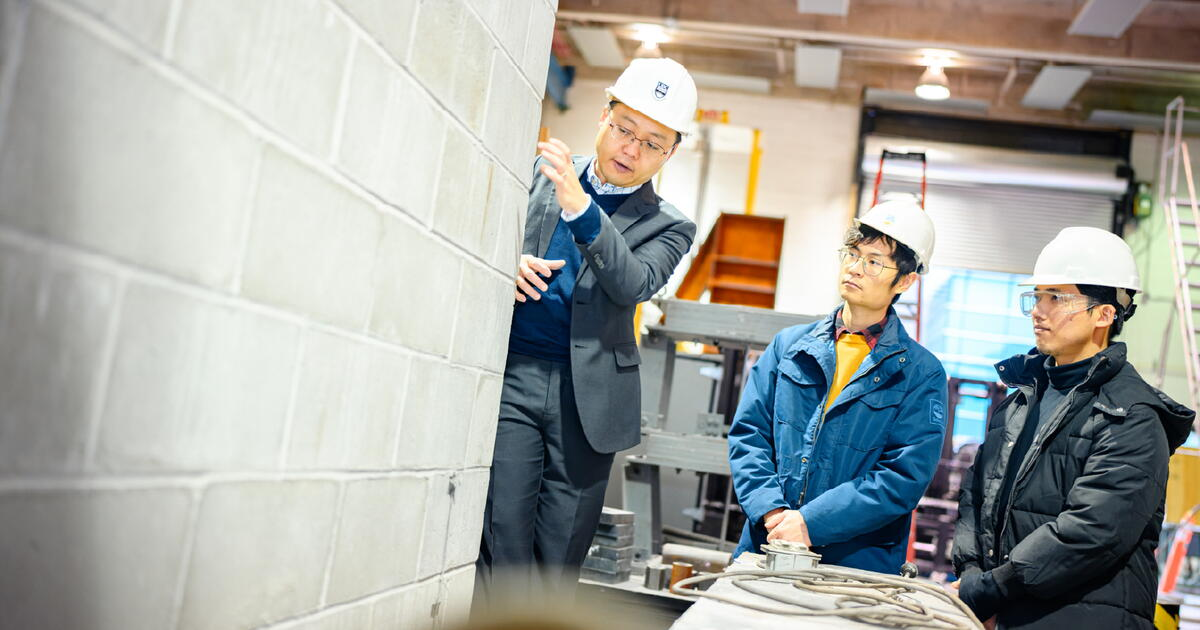
Stress lines
A UBC structural engineer is studying how buildings fail during earthquakes, and redesigning them so they don’t.
Original reporting by Chris Cannon
For Dr. Lisa Tobber, protecting the lives and homes of thousands of Canadians involves smashing a lot of concrete. The structural engineering professor and her students love nothing more than to gather at their warehouse-sized laboratory on the UBC Okanagan campus, stick beams the width of bathtubs into industrial crushers, and wait with bated breath for the massive blocks to snap like popsicle sticks. The exercise is meant to help future homes and high-rise buildings stay upright during earthquakes, from minor tremors to major shakes.
2026 Winner: Bio 101Source image and credit remain with magazine.alumni.ubc.ca; reuse permission is unverified.
44 / 882026-05-01
spring-2026
2026 Winner: Bio 101
Winner of the 2026 alumni UBC Short Fiction Contest.
Original reporting by Sherman Lam, BSW’86
Virginia Aulin (BA’85) received graduate degrees from the University of Western Ontario and Oxford and has worked as a communications, government affairs, and HR executive for companies in Canada and the US. She has visited almost 50 countries and written travel articles for many publications. She was editor of Room magazine for 10 years.
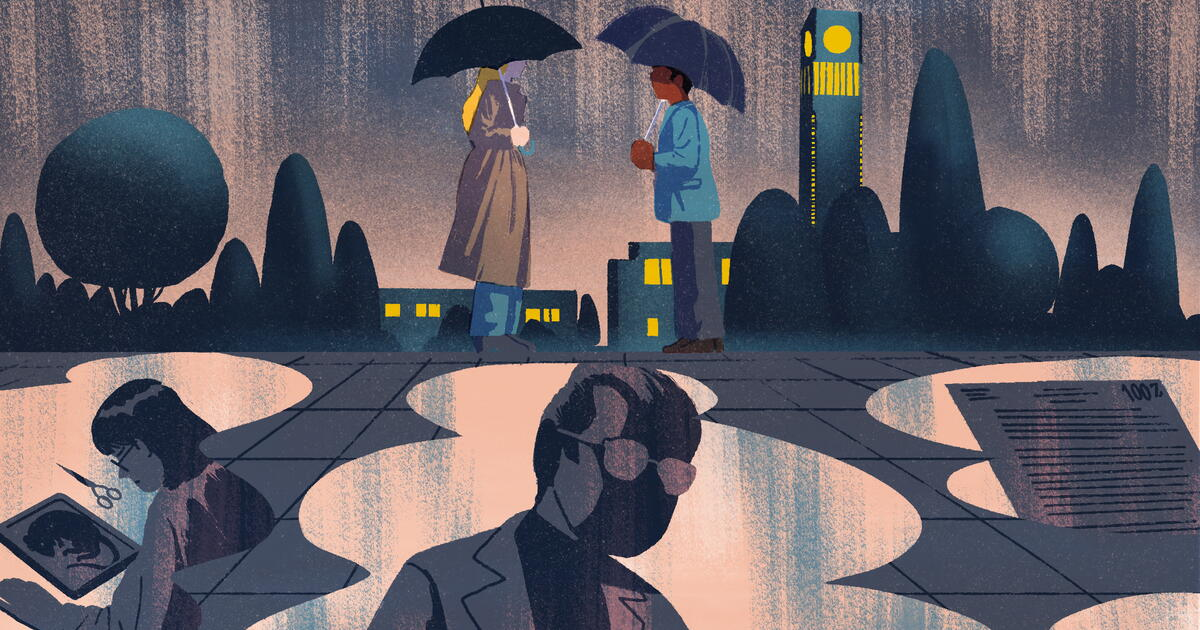
My umbrella flips inside-out in the violent wind just before I reach the biology building, and in the seconds it takes me to force the spokes back down, my hair is soaked.
A closer reading / Interpretation Editorial interpretation
Returning is a form of forward motion
Across language, careers, collections and food science, the UBC stories in this issue treat connection as something people practise.
This issue’s theme is an editorial interpretation, not a claim made by UBC Magazine. It comes from placing several source stories beside one another: graduates return language to family life; alumni revisit an earlier passion; a historic woolly dog pelt returns to Coast Salish territory; and a food-science graduate carries university training into a product used every day.
The common thread is not nostalgia. It is translation. A degree becomes teaching, a career detour becomes usable experience, an object becomes a relationship with living communities, and a laboratory method becomes a dependable cup of coffee.
Homecoming therefore has more than one geography. It can happen on campus, in a community, in a workplace or inside a practice that someone chooses to keep alive.
“The land of misfit toys”Source image and credit remain with magazine.alumni.ubc.ca; reuse permission is unverified.
46 / 882026-05-04
spring-2026
“The land of misfit toys”
Meet one of the minds behind Inspired Word Café, an Okanagan literary society that caters to the margins.
Original reporting by Richard Littlemore
It was Erin Scott’s kindergarten stage debut that convinced her parents their child was a born performer. During a Christmas concert, she was standing at the back of the stage blending in—but then the music started. “I parted the other children, came to the front of the stage, and bellowed the songs,” Erin recounts, grinning.
Shared spacesSource image and credit remain with magazine.alumni.ubc.ca; reuse permission is unverified.
48 / 882026-05-04
spring-2026
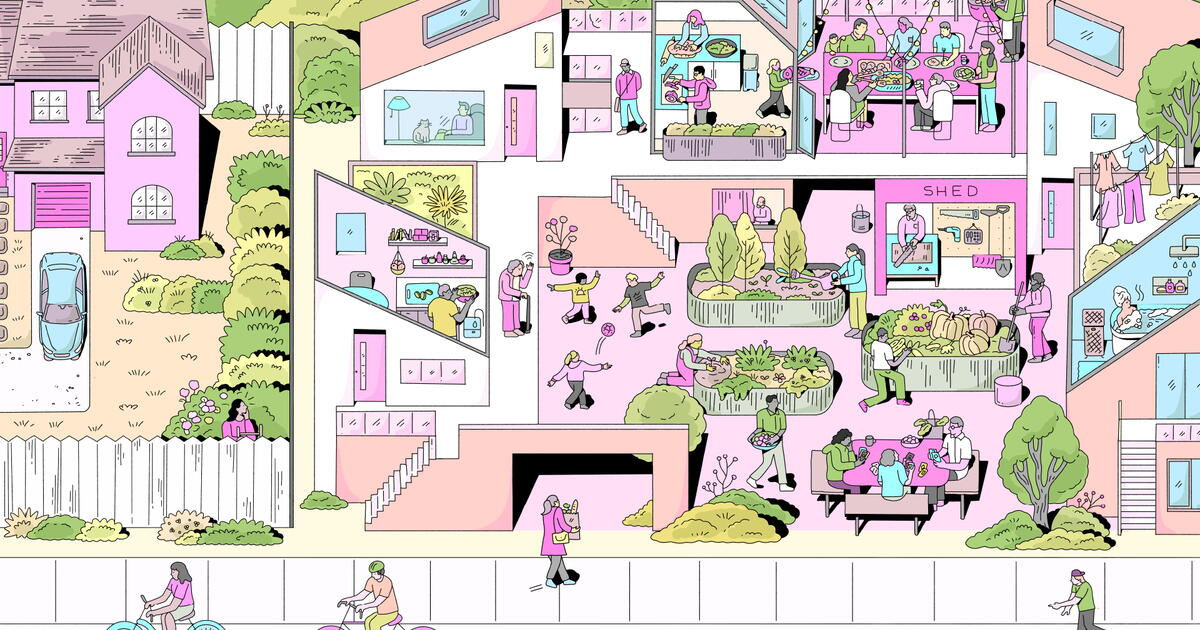
Shared spaces
A detached house has long been the dream of homeownership, but community-oriented living is gaining traction.
Original reporting by Chris Cannon
Whoever came up with the line “build a longer table, not a higher wall” may have found the prescription for saving the world. On a smaller scale, they’ve created a powerful advertising slogan for the concept of shared housing.
Why connection mattersSource image and credit remain with magazine.alumni.ubc.ca; reuse permission is unverified.
49 / 882026-05-04
spring-2026
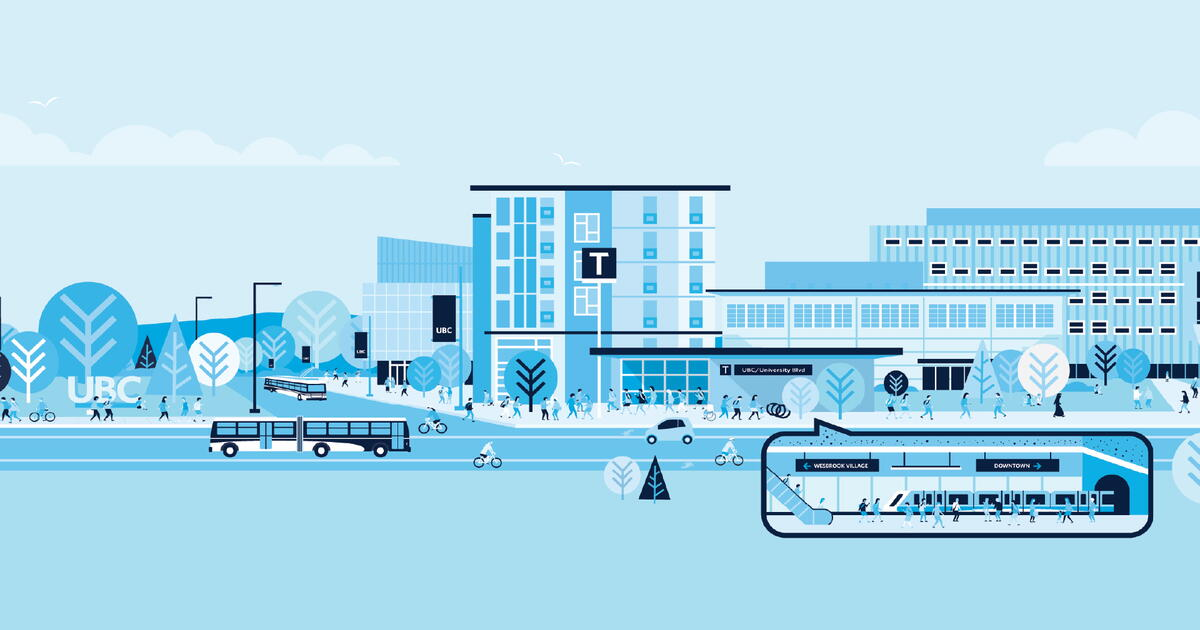
Why connection matters
Dr. Benoit-Antoine Bacon reflects on transit and building a more connected region.
Original reporting by Richard Littlemore
Every day, tens of thousands of people make their way to UBC from across Metro Vancouver. Many rely on a bus system that is stretched beyond capacity. At peak hours, a bus arrives at UBC’s Point Grey campus every 44 seconds. And still, it’s not enough to meet demand.
UBC researchers describe why some people with Huntington disease develop symptoms 10–12 years earlier. The interval is useful as a scale marker, not as an average for every patient.
Source: UBC News Reported interval for some patients; no denominator or population average is asserted.
How can Canada fix its housing crisis?Source image and credit remain with magazine.alumni.ubc.ca; reuse permission is unverified.
52 / 882026-05-06
spring-2026
How can Canada fix its housing crisis?
UBC researchers are investigating and advocating for better housing outcomes across the country, including the development of some policy-ready tools that are helping governments respond to the affordability crisis with precision.
Original reporting by Chris Cannon
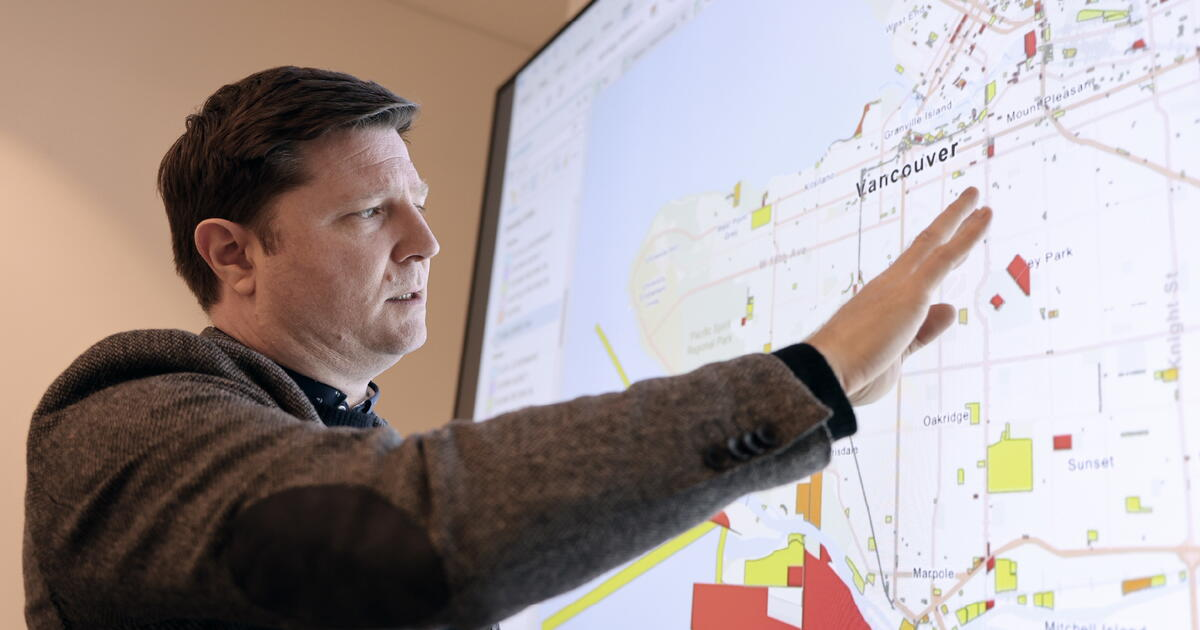
Dr. Craig Jones’s most recent HART project charts the current state and availability of all publicly owned land in British Columbia, with an eye to identifying parcels that could be used more effectively or made available for affordable housing projects. “I’m doing everything I can to draw attention to places of potential.” Photo: Rey Do/UBC.
UBC researchers are investigating and advocating for better housing outcomes across the country, including the development of some policy-ready tools that are helping governments respond to the affordability crisis with precision.
Celebrating a milestone with a lasting legacySource image and credit remain with magazine.alumni.ubc.ca; reuse permission is unverified.
55 / 882026-07-28
give-ubc
Celebrating a milestone with a lasting legacy
Margo Jacobson’s sons created an award to celebrate their mother’s birthday and honour her career as an educator.
Original reporting by Richard Littlemore
For several decades, Margo Jacobson built her teaching career on a simple principle: before learning academics, children must be taught kindness and respect.
A closer reading / Interpretation Editorial interpretation
Connection is an infrastructure problem
The strongest UBC stories this month are about the bridges that let knowledge, people and care move between institutions and communities.
The tree tool is a planning bridge between heat, equity and streets. The Langara agreement is a bridge between two institutions. The nursing gift is a bridge between alumni generosity and future clinical practice.
None of these connections is automatic. They need maps, agreements, money, time and people willing to maintain the link after the announcement has passed.
That is the less sentimental meaning of connection in this issue: a structure that lets someone else move farther than they could alone.
From coffee to intramurals: Finding a place to belongSource image and credit remain with magazine.alumni.ubc.ca; reuse permission is unverified.
56 / 882026-07-29
give-ubc
From coffee to intramurals: Finding a place to belong
As he prepares to graduate, Abdullah Naseer Ud Din reflects on how the community, intramural sports, and a donor supported-award shaped his sense of belonging at UBC Okanagan.
Original reporting by Richard Littlemore
The line for coffee stretches out the door as students wait for their morning caffeine fix. Somewhere between small talk and introductions, a conversation begins between a student and a professor.
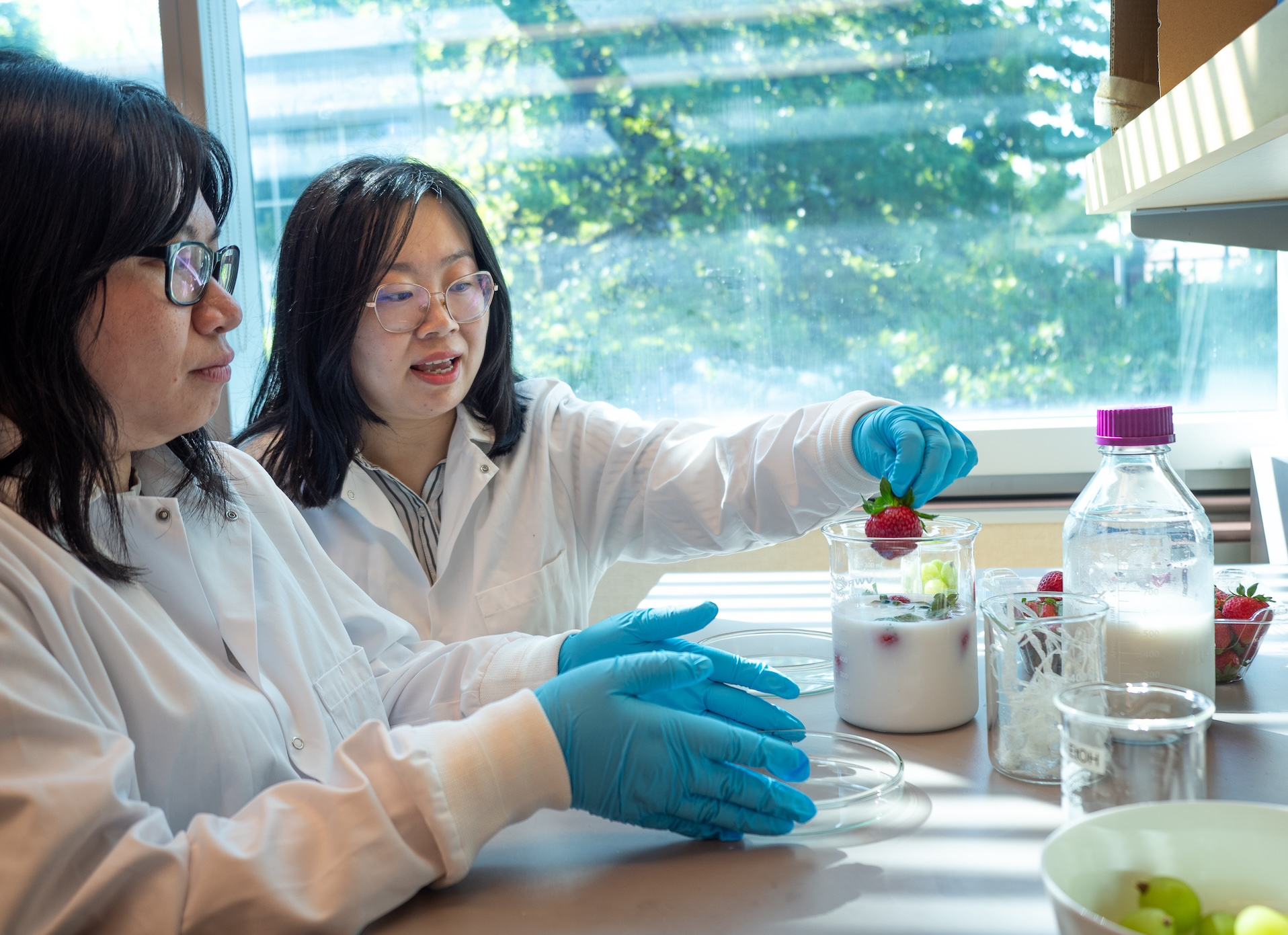
UBC seaweed-derived coating keeps strawberries fresher than a fridge - UBC NewsSource image and credit remain with news.ubc.ca; reuse permission is unverified.
58 / 882026-08-04
UBC News
UBC seaweed-derived coating keeps strawberries fresher than a fridge
The agar-based coating could help cut spoilage, food waste and reliance on refrigeration
Original reporting by UBC
UBC seaweed-derived coating keeps strawberries fresher than a fridge is included as a short source-linked brief in the September edition.
Construction underway on new location for UBC Learning Exchange - UBC NewsSource image and credit remain with news.ubc.ca; reuse permission is unverified.
59 / 882026-08-11
UBC News
Construction underway on new location for UBC Learning Exchange
Targeted for completion in 2029, the accessible building will enhance Learning Exchange programs.
Original reporting by UBC
Construction underway on new location for UBC Learning Exchange is included as a short source-linked brief in the September edition.
Copenhagen, DenmarkSource image and credit remain with magazine.alumni.ubc.ca; reuse permission is unverified.
60 / 882026-08-12
my-town
Copenhagen, Denmark
UBC alum Kim-Sa Ngo shares the urban delights and communal vibe of Denmark’s charming capital.
Original reporting by Richard Littlemore
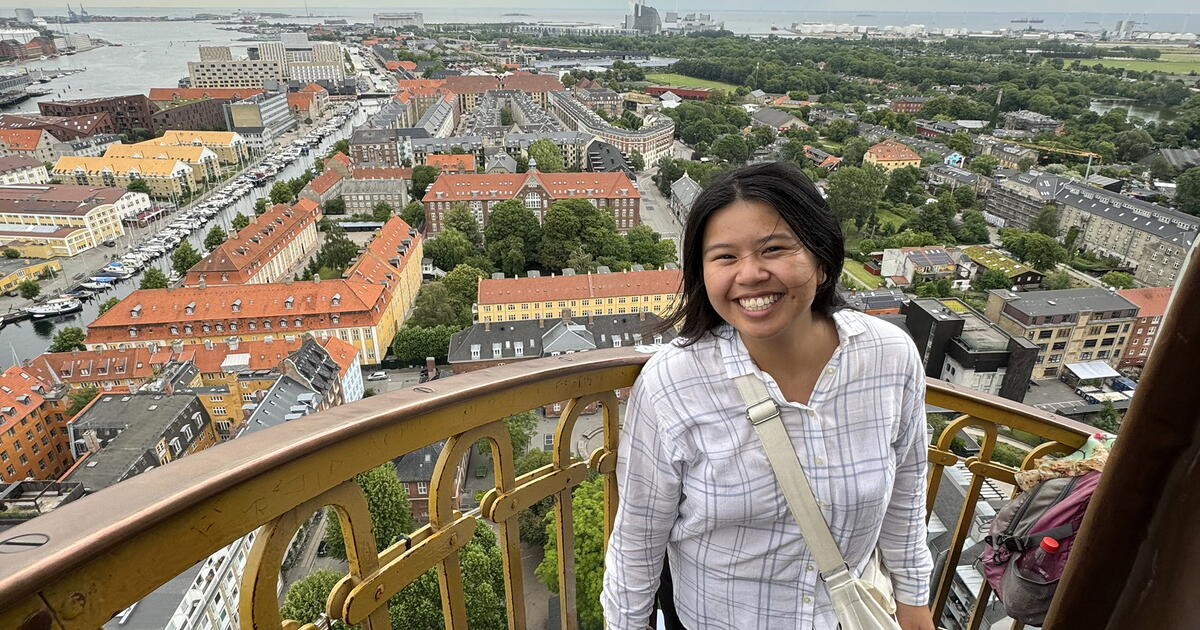
UBC alum Kim-Sa Ngo at the Church of Our Saviour in Copenhagen, a famous landmark with a serpentine spire that offers panoramic views of the city. Photos courtesy of Kim-Sa except where noted.
Kim-Sa Ngo (BA’20) works in risk management at a large Nordic bank and has been living in Copenhagen since September 2023.
The unexpected events that shaped these alumni’s careersSource image and credit remain with magazine.alumni.ubc.ca; reuse permission is unverified.
61 / 882026-08-12
readers-write
The unexpected events that shaped these alumni’s careers
Whether life handed them a challenge or an opportunity, these UBC grads pivoted and persevered.
Original reporting by Kyna Airriess
We can plot out a career path as best we can, but often life has other plans. Sometimes a once-in-a-lifetime opportunity comes your way, and you have to drop everything to take it. Sometimes the path you planned for doesn’t unfold how you imagined, but if you stick with it, it will be even more rewarding than you expected. Sometimes a tragedy (or a blessing) shifts your entire perspective on life. In fact, the way you respond to unexpected events might be what truly shapes your career—as these UBC grads know all too well.
UBC Learning Exchange to get new purpose-built homeSource image and credit remain with magazine.alumni.ubc.ca; reuse permission is unverified.
62 / 882026-08-12
campus
UBC Learning Exchange to get new purpose-built home
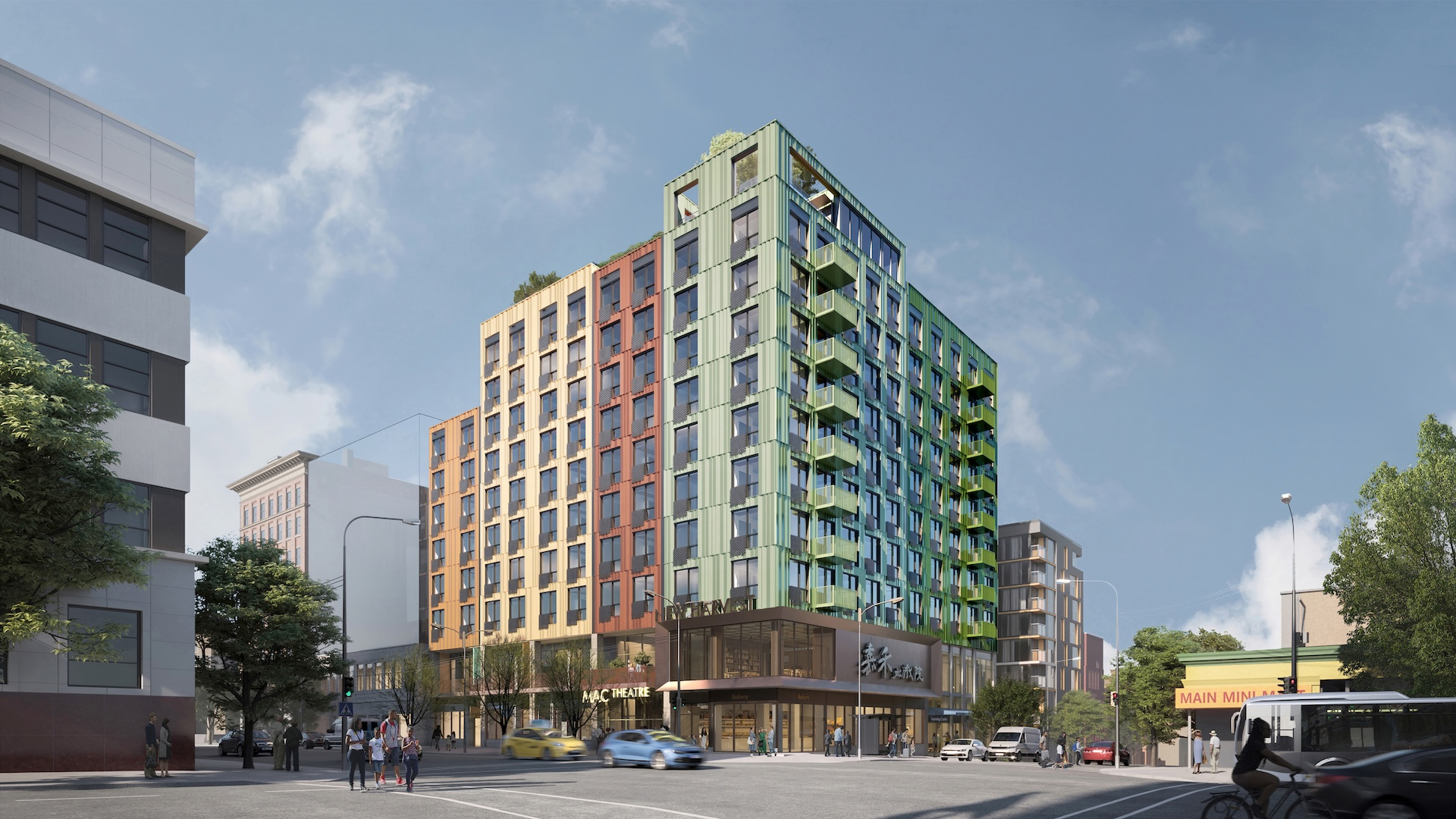
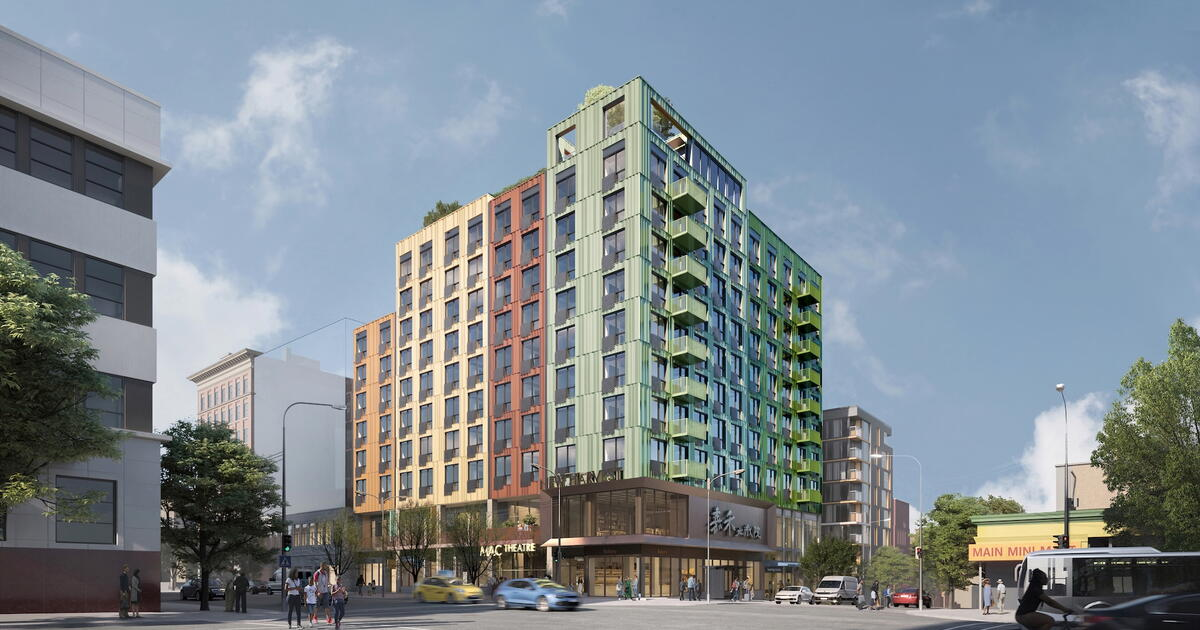
Targeted for completion in 2029, the accessible building will enhance Learning Exchange programs.
Original reporting by Lou Corpuz-Bosshart
This architectural rendering depcits the mixed-use, non-market housing development that will become the future home of the UBC Learning Exchange. Image by MA+HG Architects.
Projected share of North American forests facing greater pest and disease threats by mid-century
>80%Forests at greater risk / projected
The study’s percentage is a projection used to describe exposure, not a claim that every forest will experience the same outcome.
Source: UBC News Projected estimate reported by the source; time basis is mid-century.
UBC-developed 'wood foam' enters production as Indigenous-led pilot plant opens in Vancouver - UBC NewsSource image and credit remain with news.ubc.ca; reuse permission is unverified.
63 / 882026-08-12
UBC News
UBC-developed ‘wood foam’ enters production as Indigenous-led pilot plant opens in Vancouver
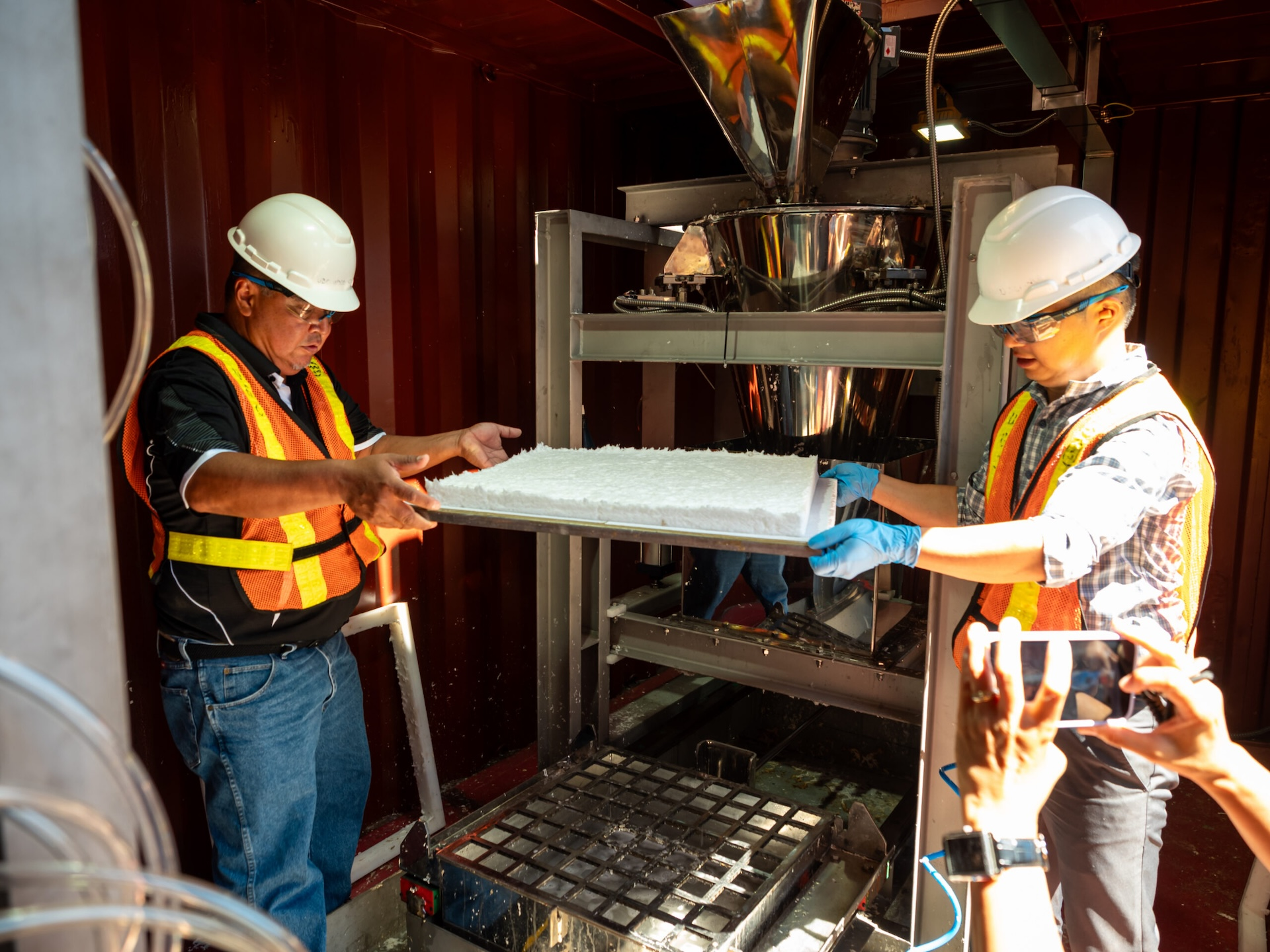
A landmark partnership between the Wet’suwet’en First Nation and UBC is pioneering a made-in-B.C. solution to the global plastic crisis, turning local forestry waste into biodegradable foam packaging.
Original reporting by UBC
UBC-developed ‘wood foam’ enters production as Indigenous-led pilot plant opens in Vancouver is included as a short source-linked brief in the September edition.
When wildfire news goes dark, distrust spreads as fast as the flamesSource image and credit remain with magazine.alumni.ubc.ca; reuse permission is unverified.
64 / 882026-08-14
environment-humanities-technology
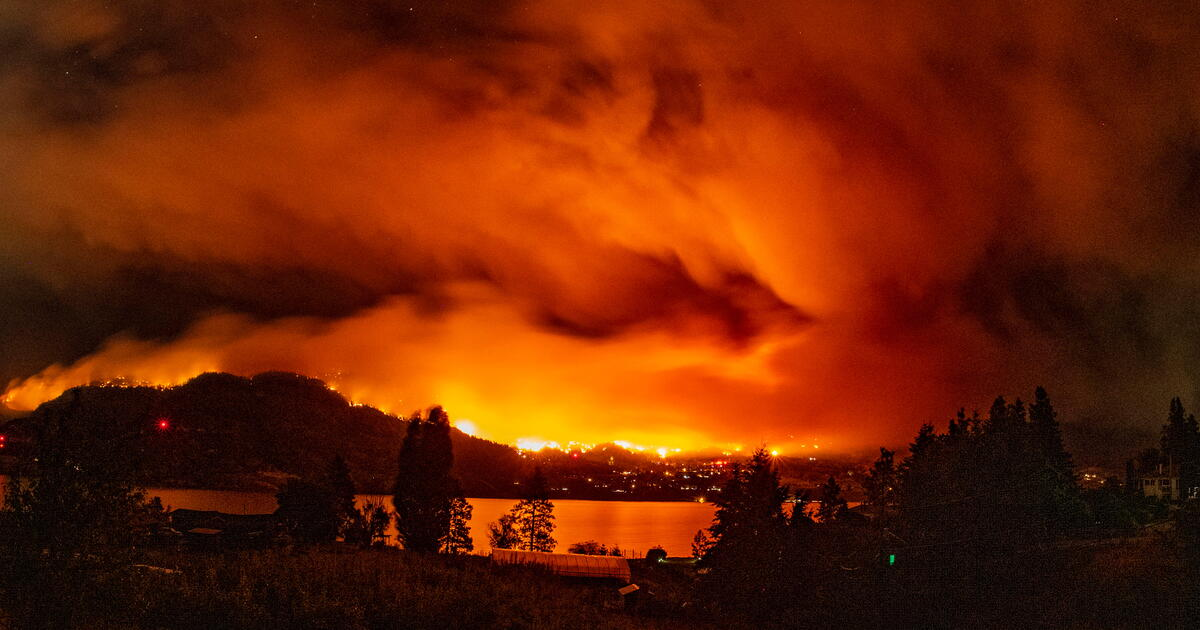
When wildfire news goes dark, distrust spreads as fast as the flames
Research spanning a decade of wildfires reveals how eroding trust and Meta's Canadian news ban have changed where people turn for information during emergencies.
Original reporting by Mary Lynn Young and Alfred Hermida
On August 1, 2023, a resident of British Columbia’s North Shuswap region could check Facebook for news about the Bush Creek East wildfire. The next day, they couldn’t.
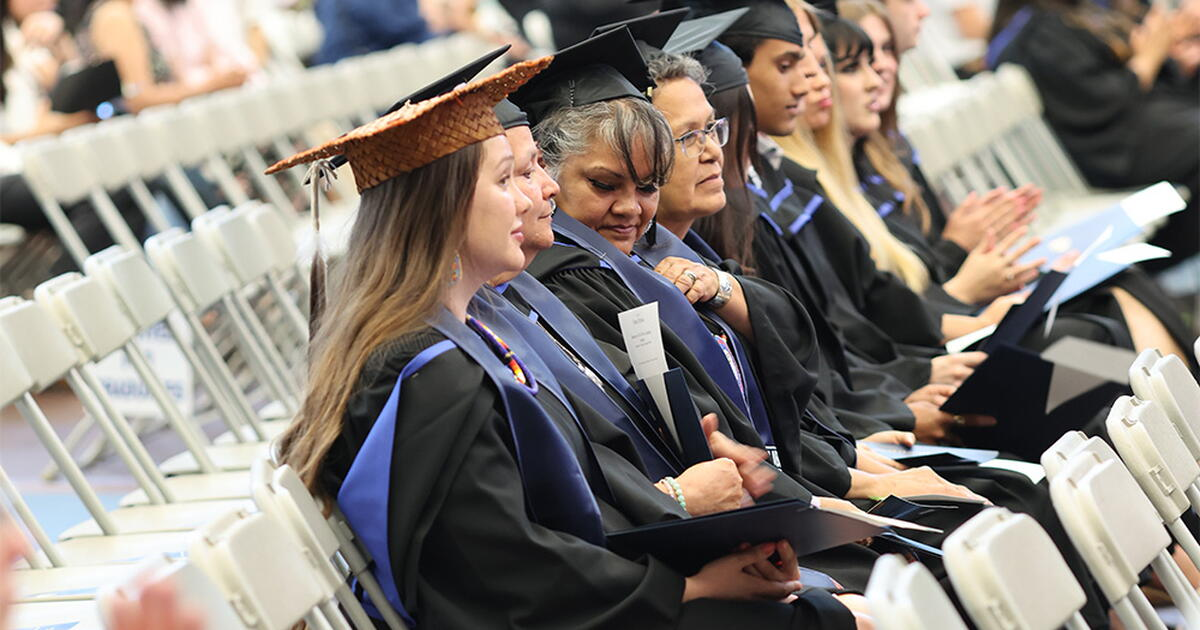
The inaugural St’át’imc Language Fluency graduates at UBC Okanagan.Source image and credit remain with UBC Magazine; reuse permission is unverified.
65 / 882026-08-21
arts-community-humanities
A language degree becomes a community practice
UBC Okanagan’s first St’át’imc language graduates are carrying immersion, teaching and family life into the next chapter of revitalization.
Original reporting by David Trifunov
Four graduates make up the inaugural cohort of UBC Okanagan’s Bachelor of St’át’imc Language Fluency. The degree was built with community partners and follows earlier Interior Salish language programs at UBCO.
The source reports fewer than 50 fluent speakers in the northern St’át’imc area, making the cohort’s work part of a much larger effort to keep language in use. Graduates described applying what they learned in early-childhood education, at home and in continued study.
The story’s most durable image is not a credential alone. It is a circle of learners who supported one another across distance, then returned that learning to families and communities.
CanopyFit maps the barriers and benefits around urban tree planting.Source image and credit remain with UBC News; reuse permission is unverified.
66 / 882026-08-25
UBC News
Where a city needs shade most
CanopyFit brings heat, equity and physical barriers into the same question: where can a new tree do the most good?
Original reporting by UBC
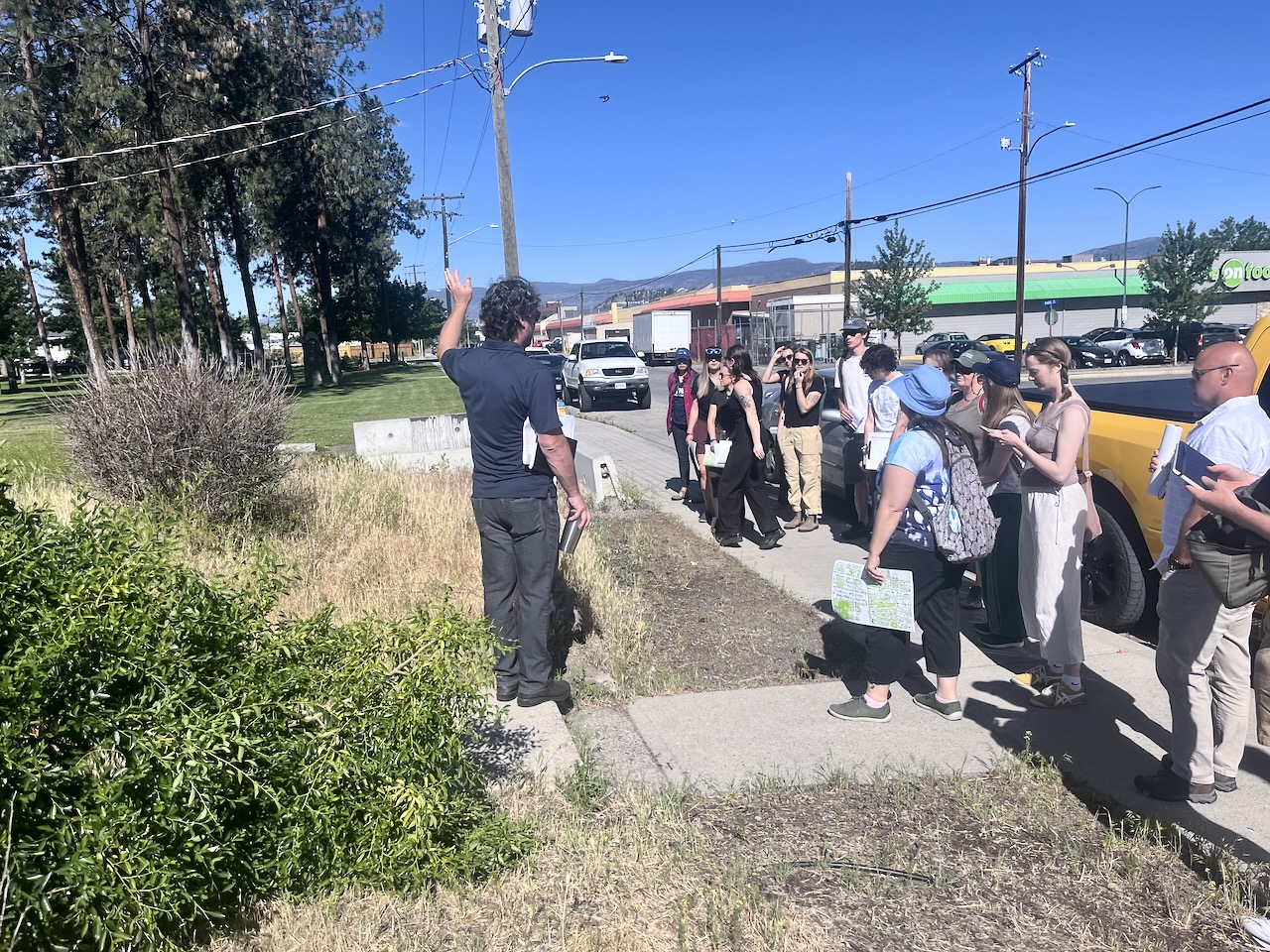
A UBC tool called CanopyFit is designed to help cities place trees with more precision. Instead of treating canopy as an even layer, it combines heat and equity data with the physical constraints that determine where planting is actually possible.
That changes the planning problem. The best site is not simply an empty patch on a map; it is a place where cooling, access and feasibility overlap. The tool gives municipal teams a way to see those trade-offs together.
For alumni living in growing cities, the idea is tangible: a greener street is also an argument about who gets comfort, shade and public investment.
UBC welcomes a new cohort of Canada research chairs.Source image and credit remain with UBC News; reuse permission is unverified.
67 / 882026-08-27
UBC News
Nine chairs, a wider research horizon
UBC’s first intake of Eddie Goldenberg Research Chairs connects incoming scholars with the long work of building research capacity in Canada.
Original reporting by UBC
UBC is welcoming nine of the 64 research chairs announced in the program’s first round: eight at Vancouver and one at Okanagan. Their appointments span fields where research capacity is also a question of public capability.
The announcement highlights the return of Canadian talent, the arrival of international expertise and the training of people who will carry the work forward. A chair is therefore more than a title; it is time, infrastructure and a place to build a team.
The alumni connection is indirect but important. Universities change through the people they attract, the students they train and the questions they make possible next.
A developmental puzzle: why snakes coil in the same direction.Source image and credit remain with UBC News; reuse permission is unverified.
68 / 882026-08-31
UBC News
A twist written into the growing body
A study of snakes developing inside eggs offers a new explanation for why their bodies coil in the same direction.
Original reporting by UBC
The study starts with a small but striking observation: snakes in an egg tend to coil in the same direction. The proposed explanation follows development rather than behaviour, tracing the twist to the way the spine grows around the gut.
That framing makes an unusual body plan easier to understand. Form is not a finished object that appears all at once; it is a record of growth, pressure and the order in which systems take shape.
For a reader, the appeal is the scale shift. A question that looks almost playful opens onto the mechanics of development and the usefulness of looking closely at familiar animals.
Practical guidance for children and families beginning kindergarten.Source image and credit remain with UBC News; reuse permission is unverified.
69 / 882026-09-01
UBC News
A gentler beginning to kindergarten
UBC early-childhood research turns the first school transition into a set of practical questions for families, educators and communities.
Original reporting by UBC
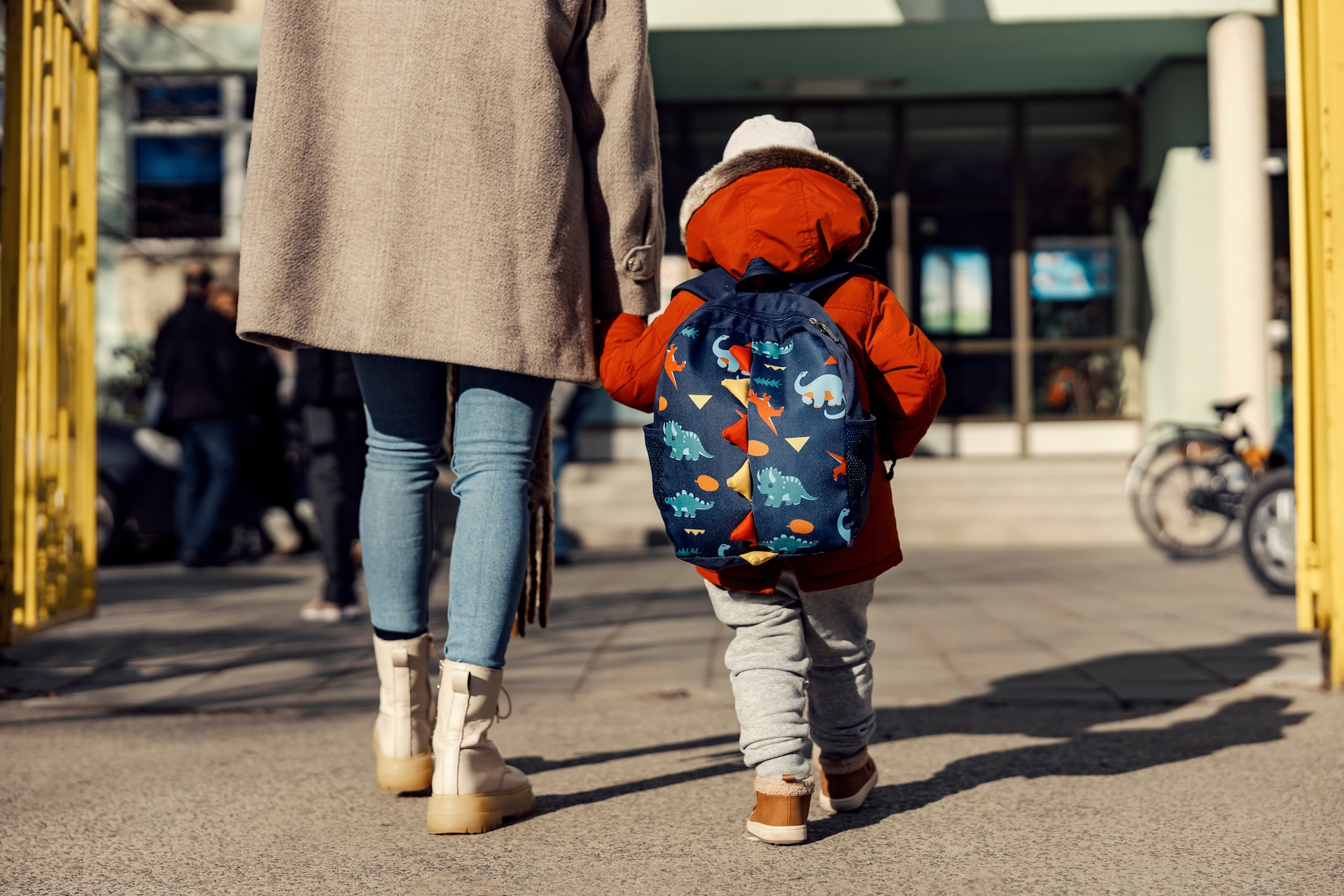
Starting kindergarten is both an event and a process. The UBC guidance connects readiness with learning that continues beyond the first weeks, while keeping the focus on what adults can do to make the transition less abrupt.
The advice is deliberately ordinary: build routines, make room for questions and notice the child’s signals. The larger point is that readiness is shaped by relationships and environments, not just by a checklist carried into the classroom.
That is a useful alumni lens too. Educational pathways are built from small acts of preparation long before anyone can see the final destination.
A forest future shaped by climate, pests and management choices.Source image and credit remain with UBC News; reuse permission is unverified.
70 / 882026-09-02
UBC News
What happens when forests lose their margin
A UBC-led study looks at how climate change and pests could reshape North American forests, with more than 80 per cent facing greater threats by mid-century.
Original reporting by UBC
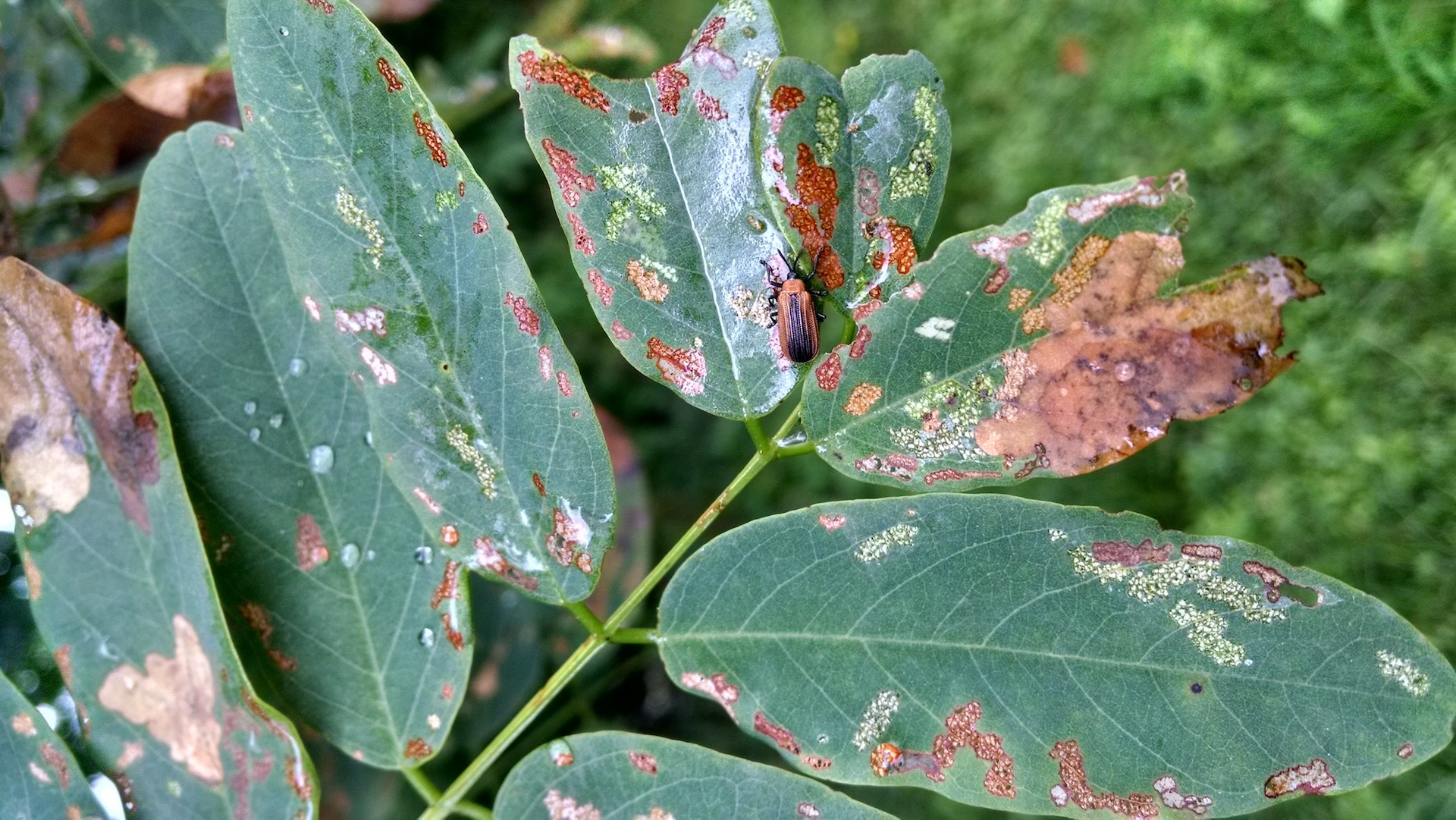
The study’s headline number is large, but its meaning is local: forests are exposed to interacting pressures rather than one isolated hazard. Warmer conditions can change where pests survive, how trees recover and which landscapes remain resilient.
More than 80 per cent of North American forests could face greater threats from pests and diseases by mid-century, according to the source. That is a projection, not a single future, and the practical question is how forest managers respond to changing risk.
The story connects climate science to the lived geography of British Columbia. A forest is habitat, carbon store, workplace and memory at the same time.
A closer reading / Research Editorial interpretation
The answer is often a longer timeline
From a coiled snake to a vanished Arctic lake, UBC research makes change visible by staying with the process.
The month’s research stories move between scales: development inside an egg, DNA changes inside neurons, field measurements at the edge of an ice shelf and projections for forests across a continent.
Their methods differ, but the editorial rhythm is similar. A headline becomes useful only when a reader can see the evidence, the limits and the next question it opens.
That discipline matters for alumni audiences who encounter research through a press release, a classroom, a workplace or a public decision. The finding is a beginning, not a conclusion.
UBC and Langara formalize a more connected student pathway.Source image and credit remain with UBC News; reuse permission is unverified.
71 / 882026-09-02
UBC News
A transfer pathway is also a promise
UBC and Langara are formalizing recruitment, transfer, scholarship and program connections so more students can move through post-secondary education with clarity.
Original reporting by UBC
The new agreement treats student mobility as shared infrastructure. UBC and Langara plan closer work on recruitment, transfer opportunities, scholarships and academic programs, building on a relationship that already moves students between the institutions.
The source describes an average of about 500 transfers to UBC from Langara each year over the past decade. The figure is a measure of an existing pathway, while the agreement sets a direction for making that pathway easier to navigate.
For alumni, access is not only a first step into education. It is also the design of the bridges that let people change direction once they are already on the road.
UBC food-science research meeting the everyday test of a latte.Photo by Paul Joseph / UBC Communications; reuse permission is unverified.
72 / 882026-09-03
business-life-science
The science behind the foam
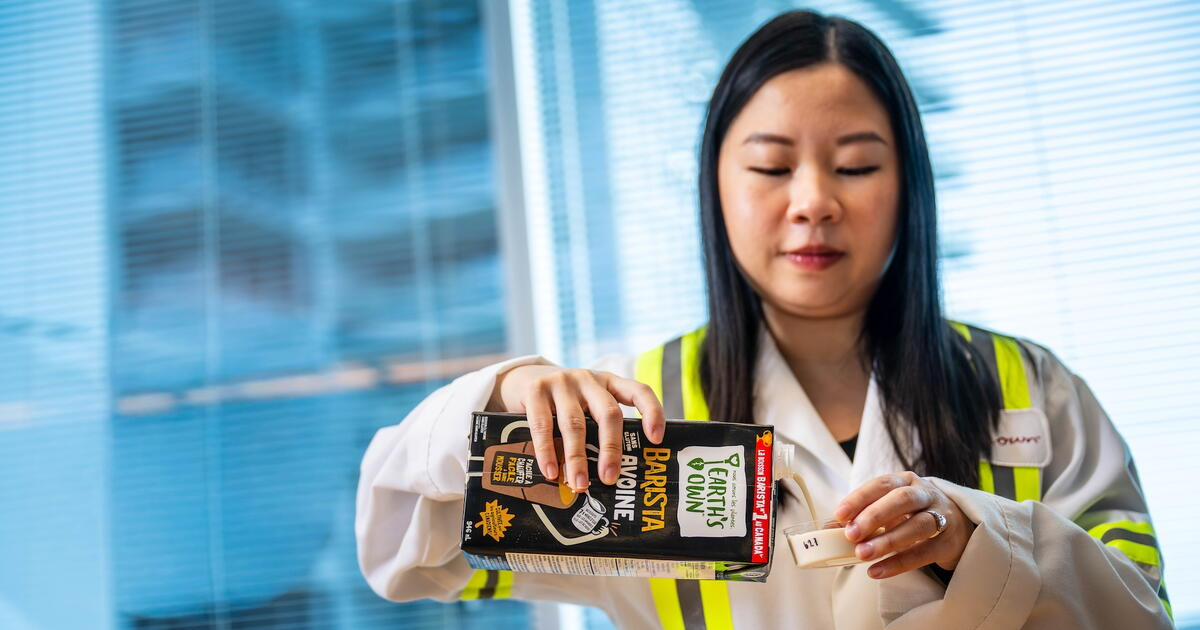
UBC alum Pamely Keung translates food-science training into the repeatable texture and taste behind a barista-style oat milk.
Original reporting by Jared Downing
For Pamely Keung, the test is whether steamed oat milk holds its foam over espresso without separating. As director of research and development at Earth’s Own, the double UBC alum works at the point where formulation, manufacturing and consumer experience meet.
The article describes years of trials to balance nutrition, taste, structure and reliable production. It also places that work in a wider university–industry relationship: research becomes useful when it can survive contact with a real process and a real customer.
The latte is the visible endpoint. Behind it are experiments, constraints and a chain of decisions that most drinkers never see.
A new health-building chapter supported by UBC alumni philanthropy.Source image and credit remain with UBC News; reuse permission is unverified.
73 / 882026-09-03
UBC News
The alumni gift behind a new nursing chapter
Matthew and Natalie MacIsaac’s $40-million donation links alumni giving to the spaces where future nurses will learn, practice and lead.
Original reporting by UBC
UBC’s announcement describes a $40-million gift from alumni Matthew and Natalie MacIsaac, the largest donation ever made to a Canadian school of nursing. The school and its new health building will carry the MacIsaac name.
The gift is intended to support education, research and clinical learning. Its strongest promise is practical: students will have purpose-built spaces for simulation, teamwork and the habits of care that cannot be learned from a lecture alone.
Alumni giving is often described as looking back. This one is also a bet on people the donors will never meet, learning in a building they helped make possible.
Residence dining designed around safety, choice and cultural food needs.Source image and credit remain with UBC News; reuse permission is unverified.
74 / 882026-09-03
UBC News
Making the dining hall part of belonging
UBC Food Services is expanding the everyday systems that help students eat safely and in ways that respect allergies, restrictions and cultural preferences.
Original reporting by UBC
A dining hall can be a place where a student first learns the campus, but it can also be a source of uncertainty. UBC’s guidance describes support for allergies, dietary restrictions and cultural food preferences from the beginning of residence life.
The work is operational: information, communication and choices have to meet students where they are. Safety is not separate from belonging when food is part of a student’s daily routine.
The story makes a small campus service visible as a design problem. A welcoming institution is built through the details people should not have to fight to access.
The UBC Magazine biodiversity quiz uses a rotating field of native BC species.Source image and credit remain with UBC Magazine; reuse permission is unverified.
75 / 882026-09-04
quizzes
Biodiversity is a memory test with consequences
A UBC Magazine quiz turns British Columbia’s native vertebrates into an invitation to look more closely at what is at risk.
Original reporting by Alex Walls
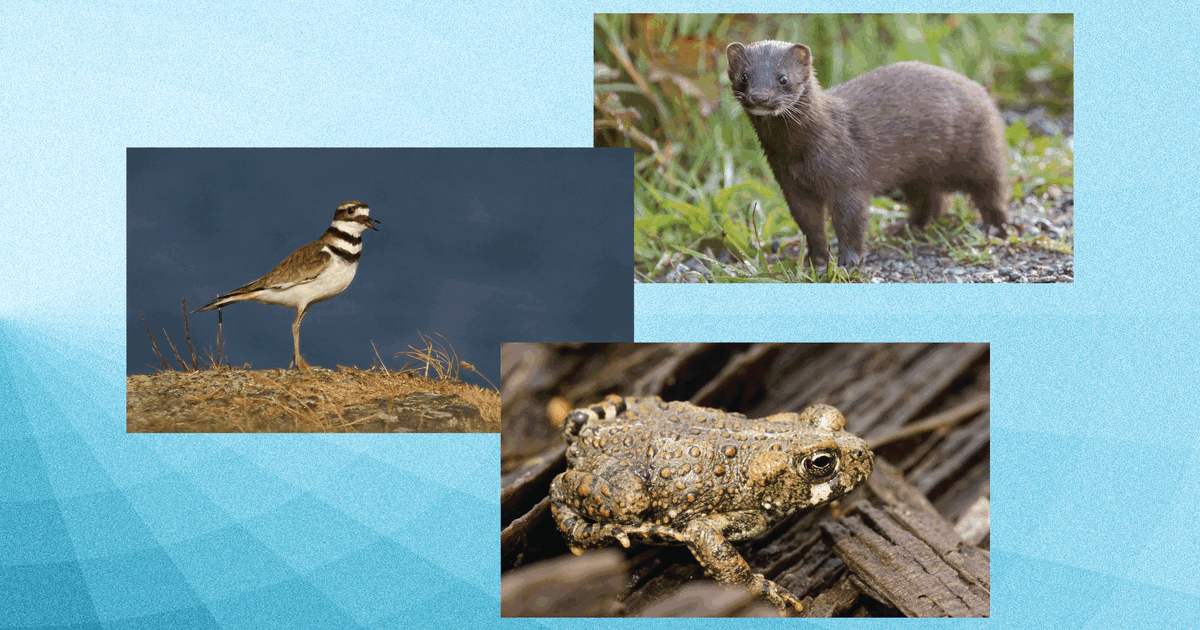
The quiz moves through mammals, birds, reptiles, amphibians and fish, asking readers to identify species from photographs and clues. It is light in form, but the context is serious: the province’s biodiversity is under pressure as the climate changes.
The piece also marks the first anniversary of the Beaty Biodiversity Centre expansion, a $45-million project that brings researchers, students and community partners together around biodiversity questions.
A quiz cannot measure ecological knowledge or protection. It can make the names of local species harder to forget, which is a small but useful beginning.
Aerial view of the buildings associated with UBC’s nursing gift announcement.Source image and credit remain with UBC Magazine; reuse permission is unverified.
76 / 882026-09-08
community-health
A gift designed for the next generation of care
Matthew and Natalie MacIsaac’s $40-million gift will name UBC’s School of Nursing and its future health building while supporting education, research and practice.
Original reporting by Lou Corpuz-Bosshart
UBC says the gift is the largest ever made to a Canadian school of nursing. In recognition, the school and its future home will carry the MacIsaac name when the change launches in early fall.
The stated use is broad but concrete: strengthen nursing education, research and clinical learning, and prepare health-care leaders for changing needs in British Columbia and beyond. The donors’ own alumni relationship is part of the story’s logic of return.
The announcement is a commitment, not evidence that future outcomes have already been achieved. Its significance will be measured later in facilities, learning and care.
A collage of alumni stories about careers that came full circle.Source image and credit remain with UBC Magazine; reuse permission is unverified.
77 / 882026-09-08
readers-write
The long way back to an earlier passion
Five alumni describe career paths that curved, paused and eventually returned to something they had once set aside.
Original reporting by Vicky Tran, BA’04
The final instalment of UBC Magazine’s Readers Write career series asks alumni to look backward without treating the past as a plan. Their stories include sport, design, food, science and other interests that reappeared after apparently unrelated work.
One contributor moved from competitive skiing through film production, sales and business development before finding a way back to sport. The value of the account is not a universal formula for career change; it is permission to notice which skills travelled with the detour.
A career can be nonlinear without being incoherent. Hindsight supplies the connective tissue, but the next move still has to be chosen in the present.
The awards provide five years of support for work spanning microbial ocean networks, toxic pollutants, communities and ecosystem health.
Source: UBC News Award value and duration stated in the institutional announcement.
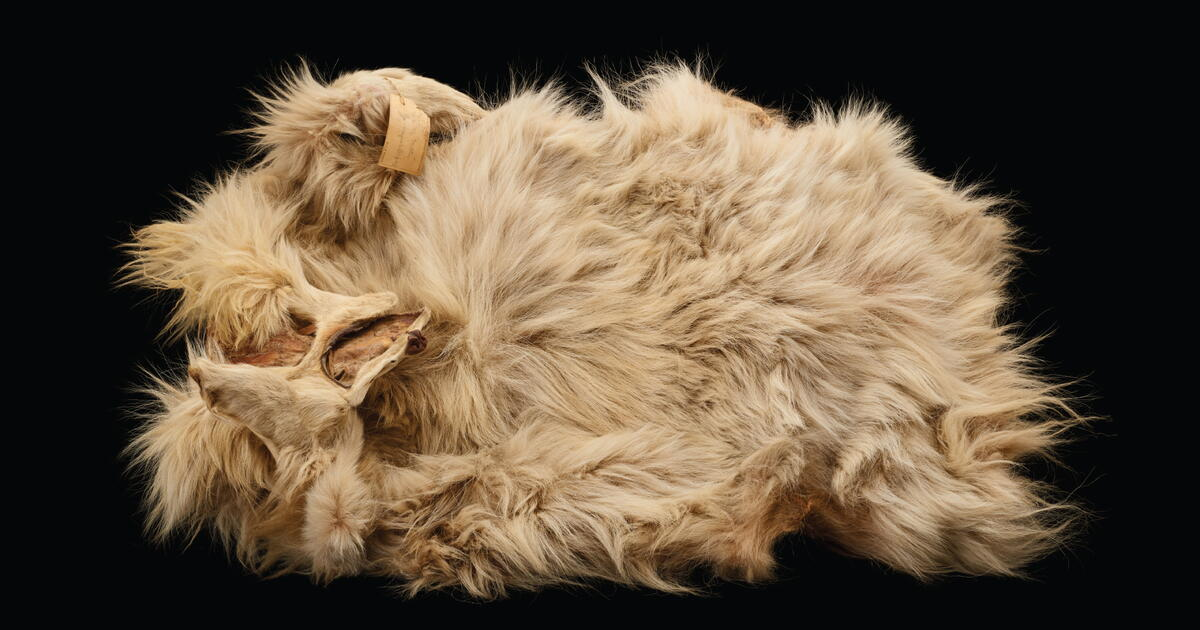
The only known woolly dog pelt returns to Canada for a year-long loan.Source image and credit remain with UBC News; reuse permission is unverified.
78 / 882026-09-08
UBC News
When an object returns to living knowledge
A Smithsonian loan brings the only known woolly dog pelt to Canada and back toward the Coast Salish communities connected to its history.
Original reporting by UBC
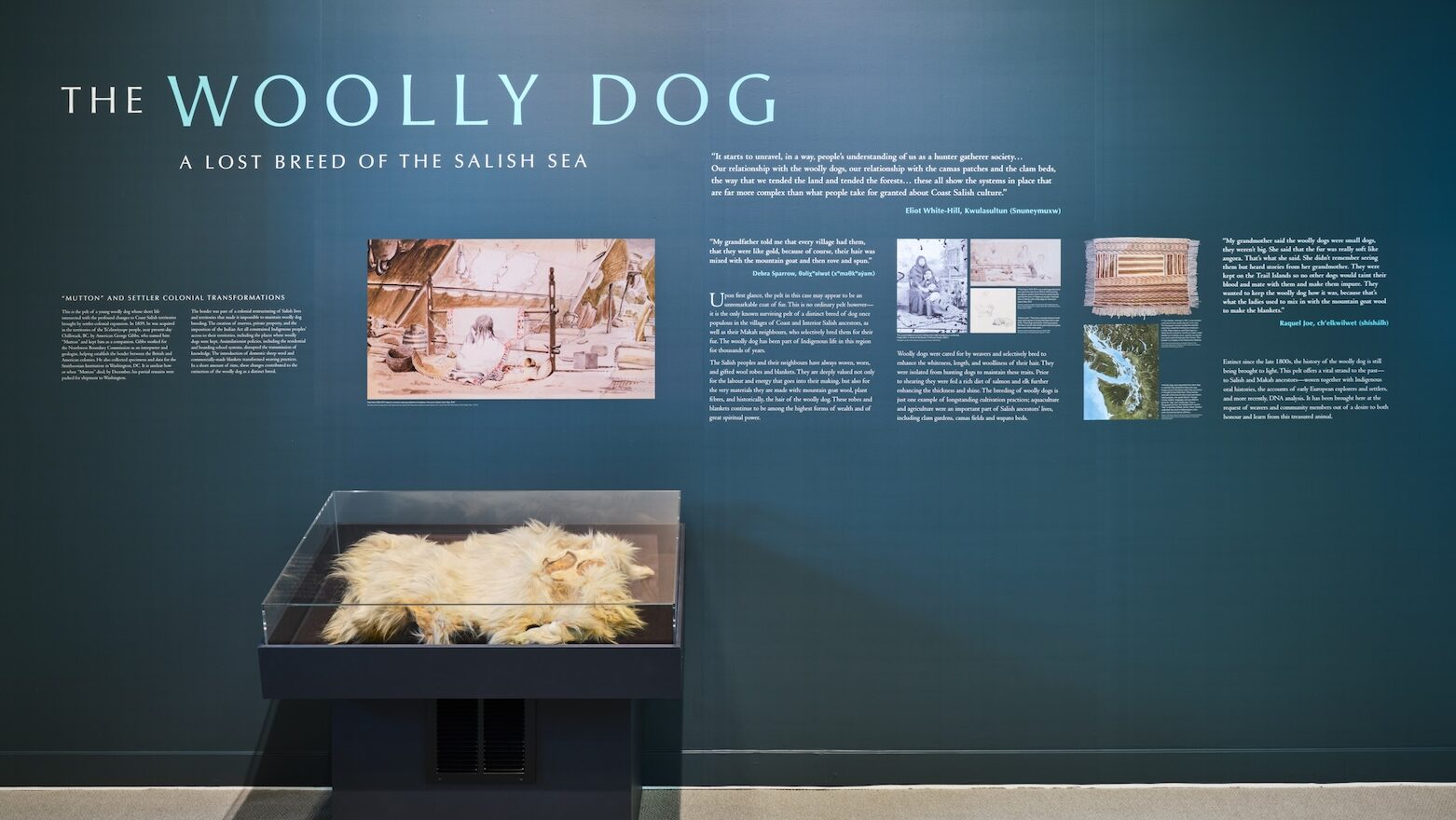
The woolly dog pelt will be on loan to UBC’s Museum of Anthropology from September 2026 to August 2027. The object is rare, but rarity is not the only reason the return matters.
The museum’s role is being shaped by the communities and knowledge keepers who will spend time with the pelt before it is placed on public display. That order makes the loan a relationship, not merely a shipment.
A collection can preserve an object while separating it from the practices that gave it meaning. This return creates room for those practices to speak again.
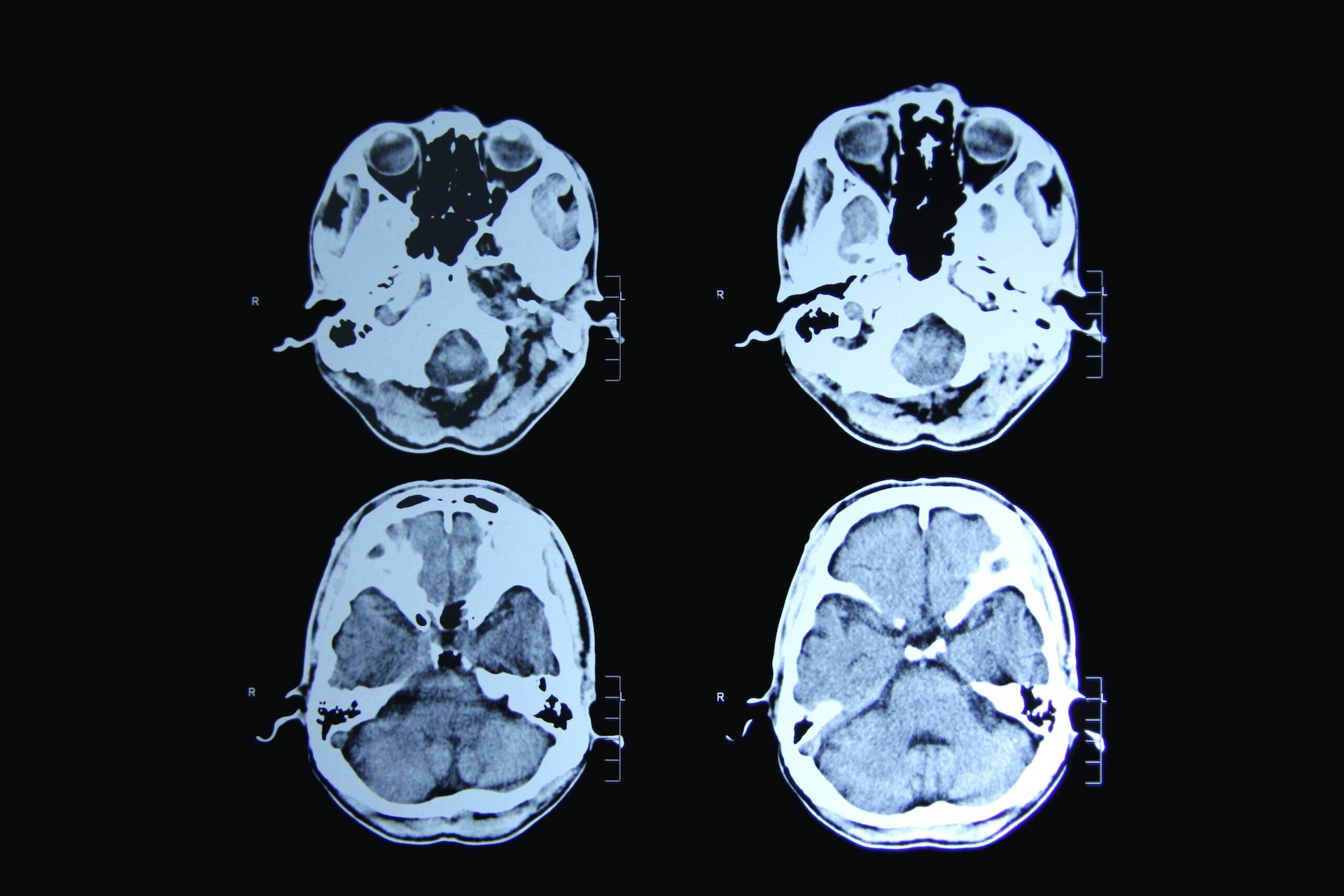
An editorial image for UBC Magazine’s brain-health explainer.Source image and credit remain with UBC Magazine; reuse permission is unverified.
79 / 882026-09-10
health
Brain health is also a social question
A UBC alumni webinar brings neurology, nursing, dentistry, nutrition and psychology into one practical conversation about ageing well.
Original reporting by Kerry Blackadar, BA’07, MJ’10
The article reports five takeaways from an alumni UBC MEDTalks session on lifelong brain health. The experts frame dementia risk as influenced by more than genetics, with midlife behaviour and the surrounding environment both relevant.
Social connection is one of the themes. The piece also points to modifiable factors and the idea that beneficial changes are not limited to one age bracket. These are educational points from a public discussion, not a personal diagnosis or treatment plan.
For an alumni audience, the connection is direct: staying mentally well is not only an individual project. It can involve relationships, habits, care and the communities that make those habits possible.
Researchers return to the Arctic edge to read a changing landscape.Photo credit remains with UBC News; reuse permission is unverified.
80 / 882026-09-10
UBC News
The field notes left by a disappearing lake
Years of measurements at Milne Fiord helped UBC researchers reconstruct how Canada’s last Arctic epishelf lake disappeared.
Original reporting by UBC
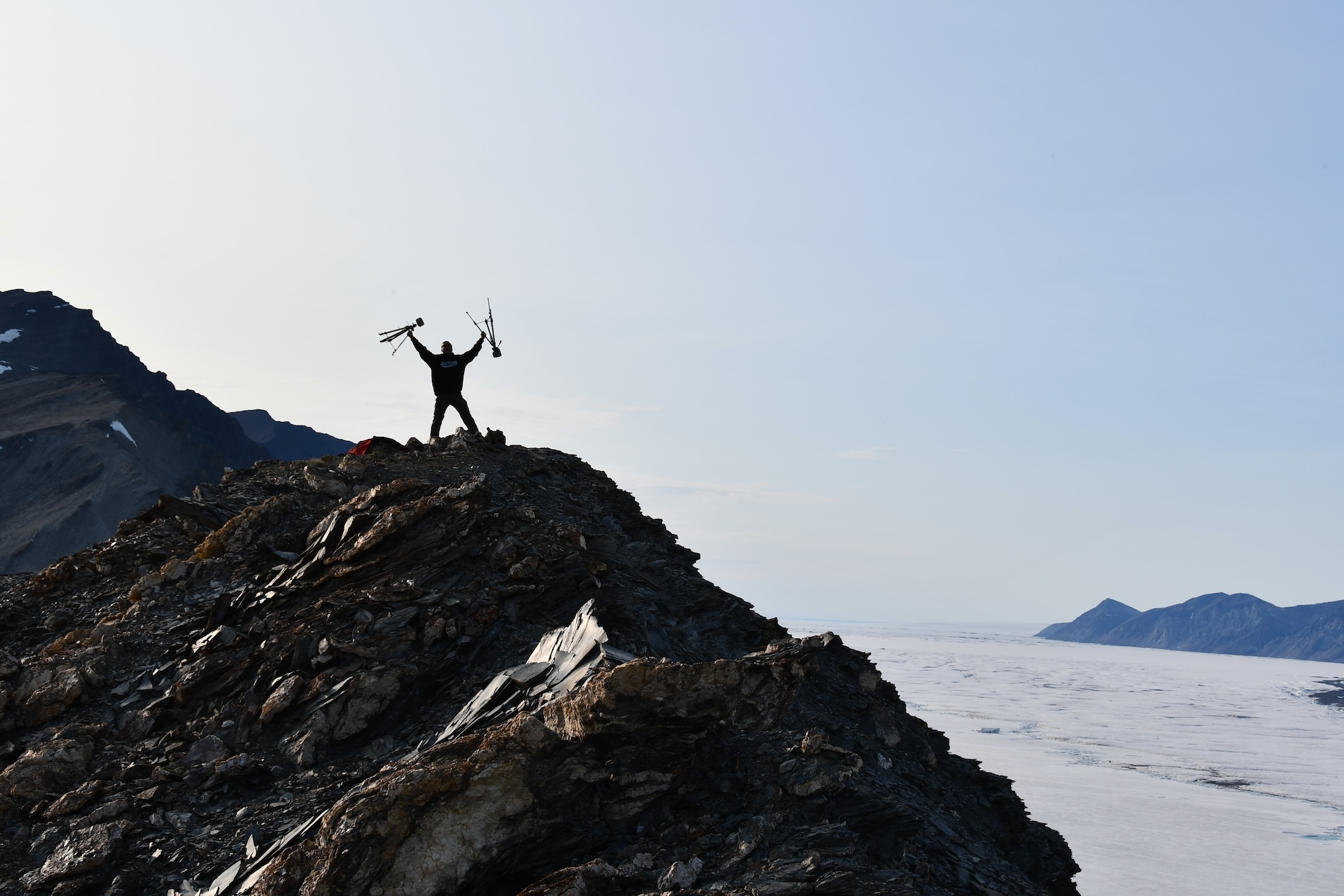
Reaching Milne Fiord is an expedition measured in flights, cargo and careful preparation. Researchers returned year after year to monitor the ice shelf and the freshwater lake beneath it.
Those observations became a record of change. The measurements helped reconstruct the loss of the lake after the ice shelf broke up in 2020, turning a remote field site into evidence about the vulnerability of Arctic systems.
The work is patient by necessity. A dramatic endpoint is only legible because someone kept returning to take the next measurement.
A vanished Arctic lake becomes evidence of a changing climate.Source image and credit remain with UBC News; reuse permission is unverified.
81 / 882026-09-10
UBC News
The last lake was not a distant story
The permanent loss of Canada’s last Arctic epishelf lake shows how quickly even a projected refuge can become a record of what changed.
Original reporting by UBC
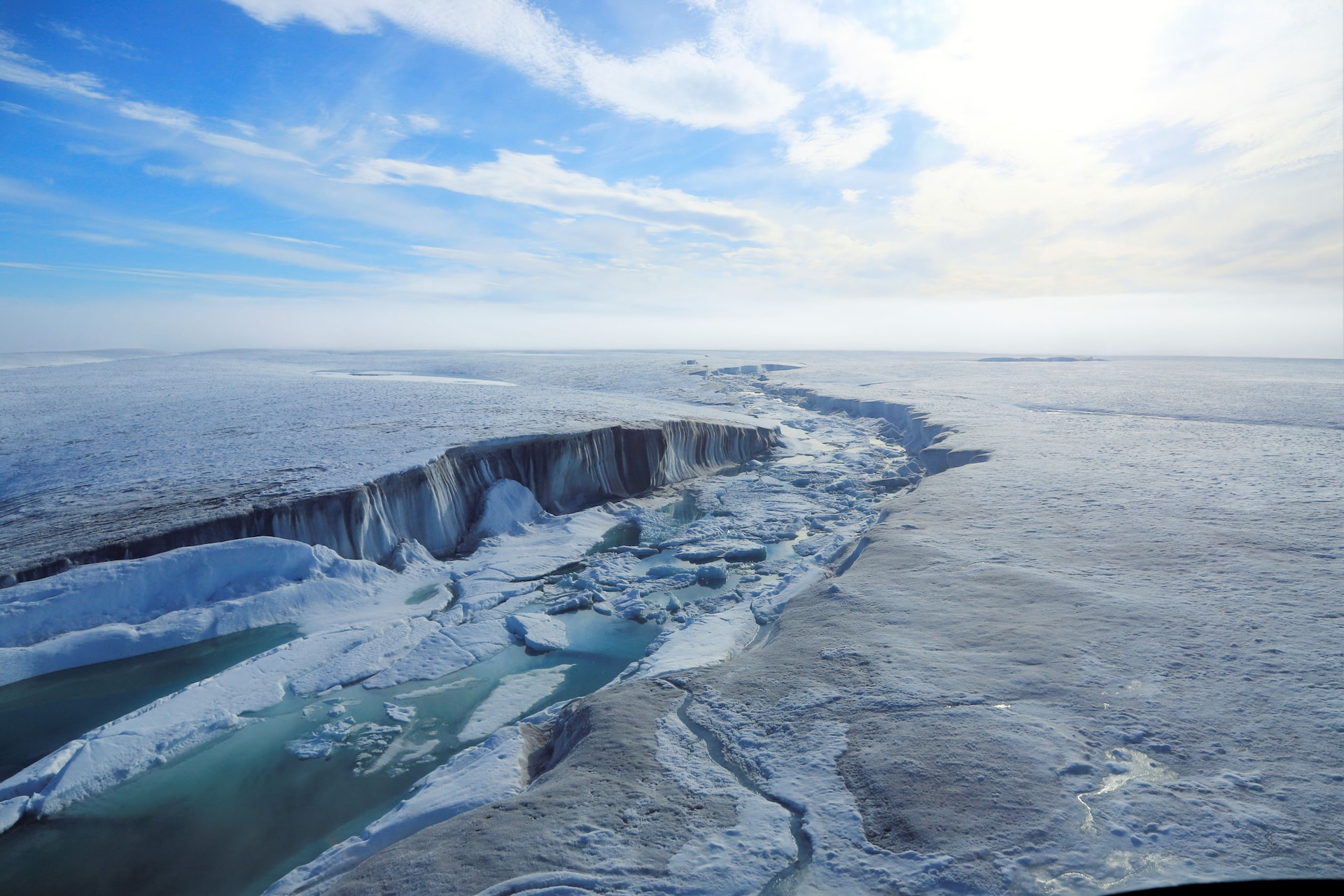
An epishelf lake forms when freshwater is held behind an ice barrier. The study confirms that Canada’s last known example is gone, ending a millennia-old ecosystem that researchers had been monitoring at the edge of the Arctic.
The loss is both specific and representative. It names one ecosystem, while also showing that places once considered relatively protected can be exposed to rapid change.
The source’s strongest lesson is about attention: a refuge is not a guarantee. It is a condition that has to be observed, understood and defended while it still exists.
A closer reading / Everyday life Editorial interpretation
Belonging is made of small systems
Food services, sleep routines and kindergarten transitions look ordinary because good support makes the ordinary easier to enter.
The month’s larger questions land in everyday places: a residence dining hall, a child’s bedtime, the first morning of kindergarten and the routines that let people participate without explaining themselves again.
These are not soft details. They are the systems that convert an institution’s values into a lived experience, especially for people carrying allergies, care responsibilities, cultural food practices or a new schedule.
An alumni magazine can look outward while still noticing the small design decisions that make a campus feel possible.
The sole known woolly dog pelt, returning to the region of its origin.Photo by Brittany M. Hance, courtesy of the Smithsonian Institution; reuse permission is unverified.
82 / 882026-09-11
humanities
A return measured in care, not distance
The only known woolly dog pelt is coming to UBC’s Museum of Anthropology, where Coast Salish communities and weavers will spend time with it before public display.
Original reporting by Sachintha Wickramasinghe, BA'11, MJ'14, and Odette Wilson
The pelt, held by the Smithsonian since 1859, is returning to the region connected to its history. Woolly dogs were bred by Salish and Makah peoples for hair used in weaving blankets, robes and clothing; the animals disappeared by the end of the nineteenth century.
The loan runs from September 2026 to August 2027. The source emphasizes that the object’s return is being shaped by community request and knowledge, including time for Elders, knowledge keepers and weavers before exhibition.
That sequence matters. A museum loan is not simply a transfer of an object. It can also be a chance to reconnect material, memory, territory and living practice.
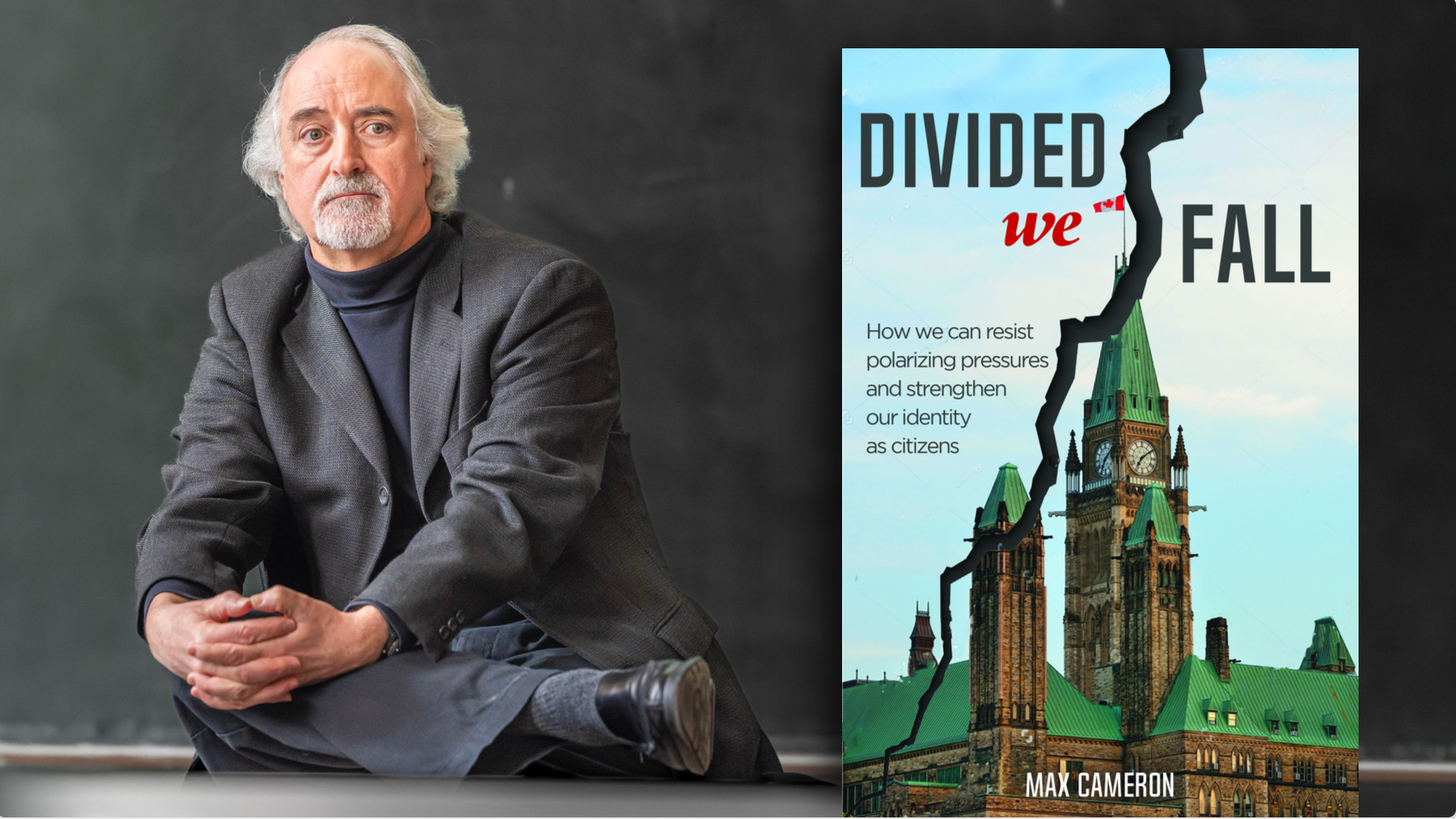
A new book explores polarization, citizenship and Canada’s democratic future.Source image and credit remain with UBC News; reuse permission is unverified.
83 / 882026-09-14
UBC News
What citizenship looks like under pressure
A new book by a UBC political scientist asks how Canada can resist deepening division and what democratic life asks of citizens.
Original reporting by UBC
The book begins with a public problem: democratic tensions are rising, and disagreement can harden into a story that other people no longer belong. The UBC perspective looks at the conditions that make polarization durable.
The source does not reduce democratic health to a single institution or a single election. It points toward habits of citizenship, the quality of public conversation and the work of resisting easy division.
For an alumni audience spread across professions and communities, the question is practical. What do we do when our shared life becomes harder to recognize as shared?
UBC researchers trace a disease mechanism inside vulnerable neurons.Source image and credit remain with UBC News; reuse permission is unverified.
84 / 882026-09-14
UBC News
A mutation that keeps changing inside the brain
UBC research on Huntington disease identifies runaway DNA changes in vulnerable neurons and a possible target for future treatment research.
Original reporting by UBC
The study examines why some people with Huntington disease develop symptoms 10 to 12 years earlier and experience a more aggressive course. Researchers found that the mutation can expand inside the brain’s most vulnerable neurons.
The result helps explain why a change present throughout the body can damage the brain so selectively. Blood samples showed little of the dramatic expansion seen in the affected brain tissue, an important distinction for future research and trials.
The work does not deliver a treatment. It narrows a question: if repeat expansion drives progression, can future therapies slow or suppress that process?
Wall Fellows connect long-horizon research with community and ecosystem health.Source image and credit remain with UBC News; reuse permission is unverified.
85 / 882026-09-15
UBC News
Five years to follow hidden forces
Two $1-million Wall Fellowships give UBC researchers time to investigate microbial ocean networks and toxic pollutants in urban environments.
Original reporting by UBC
UBC’s Wall Fellowships support Patrick Keeling and Rachel Scholes with five years to pursue questions about human and ecosystem health. One project explores microbial life along the coast; the other looks at toxic tire chemicals reaching salmon-bearing streams.
The scale of the award changes the research rhythm. Instead of asking only what can be completed quickly, the fellowship makes room for partnerships, fieldwork and the slow development of a research hub that can outlast one project.
The story is about money, but also about time. Long-term questions need an institution willing to fund the period before the answer is obvious.
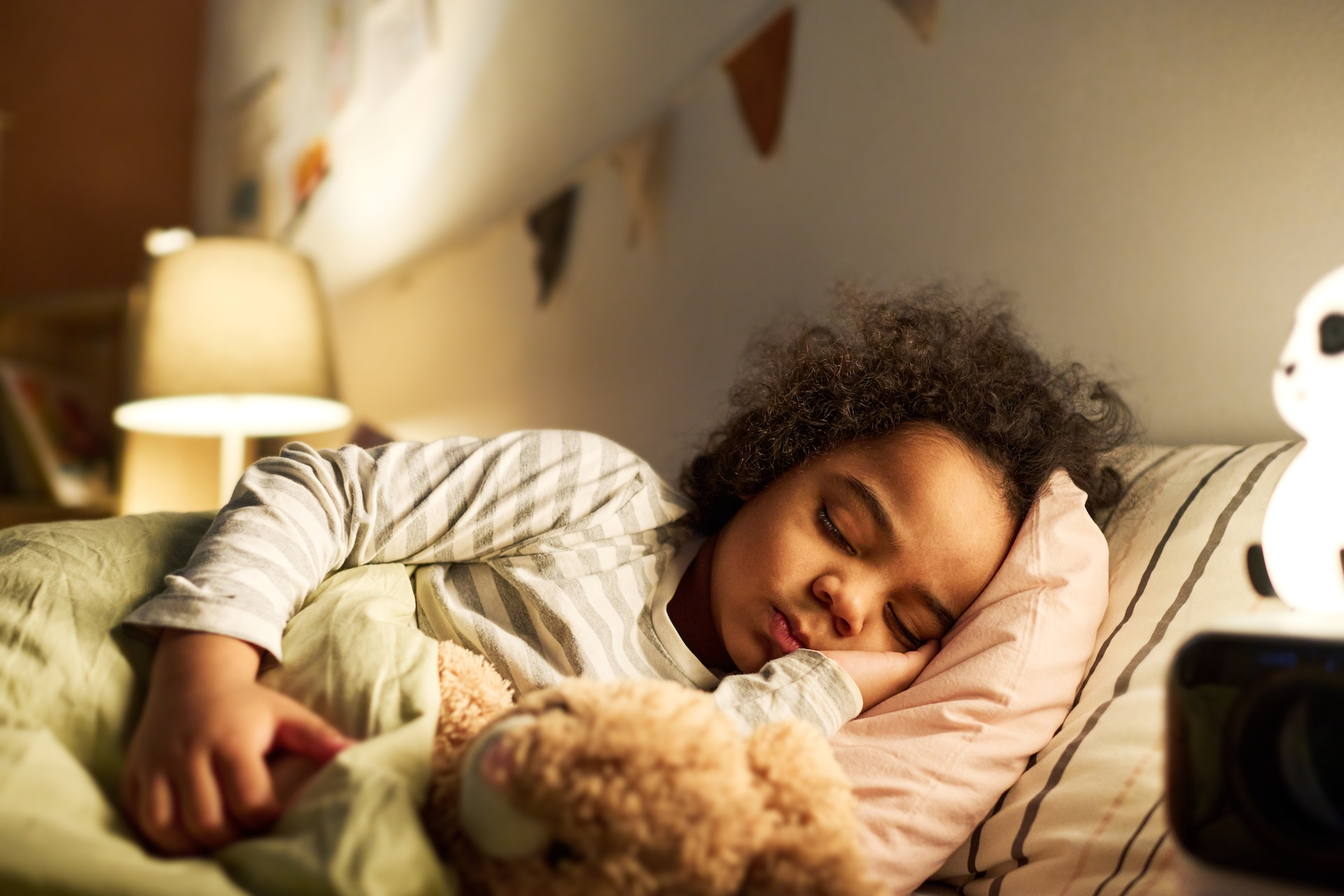
A practical back-to-school guide to children’s sleep routines.Source image and credit remain with UBC News; reuse permission is unverified.
86 / 882026-09-16
UBC News
The school-year reset begins at bedtime
A UBC pediatric neurologist offers practical ways to help children return to a healthier sleep rhythm as school starts.
Original reporting by UBC
The return to school often exposes a schedule that drifted during the summer. UBC pediatric sleep guidance treats the reset as a gradual household practice rather than a single night of discipline.
The useful advice is concrete: rebuild regular timing, make the transition predictable and pay attention to the conditions around sleep. A child’s rest is shaped by a family’s rhythms, not only by a clock.
For alumni balancing work, care and school calendars, sleep is a reminder that health infrastructure can be domestic and very small. The routine is part of the intervention.
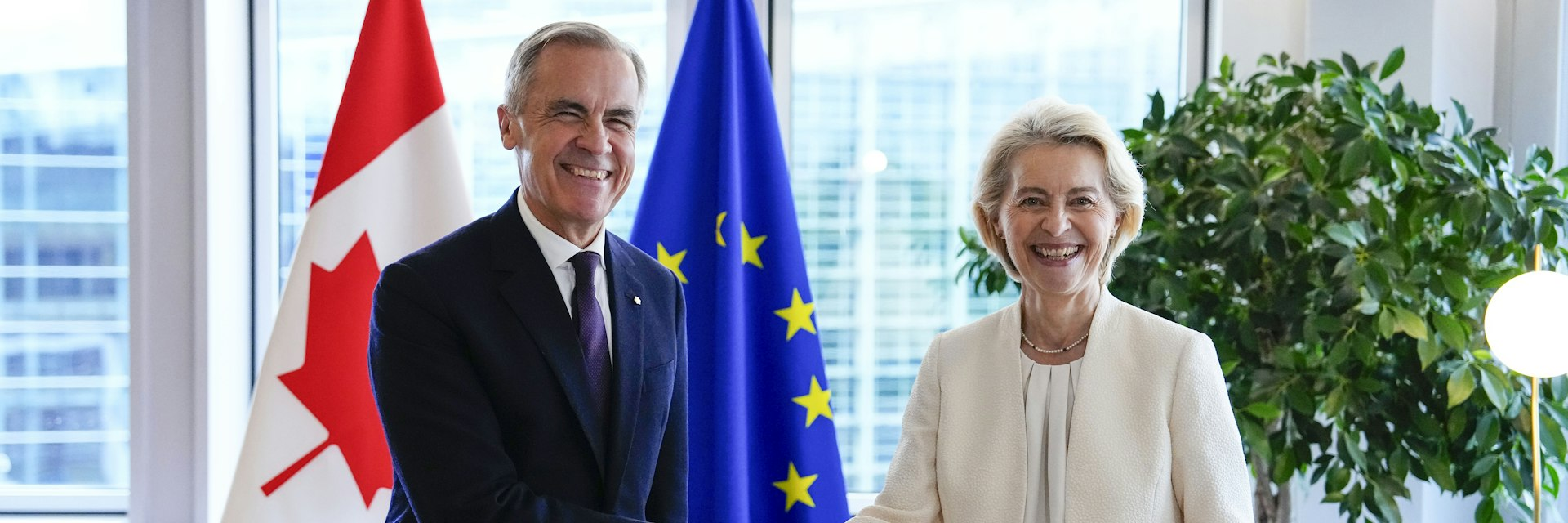
A political analysis of Canada’s possible future connections.Source image and credit remain with UBC News; reuse permission is unverified.
87 / 882026-09-16
UBC News
When trade pressure changes the map
A UBC political scientist considers how Canada’s relationship with the United States could reshape its connections with Europe and the wider world.
Original reporting by UBC
The analysis starts with a geopolitical question and follows it through institutions, trade and the choices countries make when a familiar relationship becomes less stable. The idea of an associate relationship with the European Union is presented as a possibility to examine, not a settled outcome.
That distinction matters. International alignment is built through negotiations, incentives and political willingness, not through a headline alone. The article uses the present pressure as a way to ask what alternatives could look like.
For alumni working across borders, the piece is a prompt to watch the connective tissue: rules, markets and relationships that often become visible only when they are under strain.
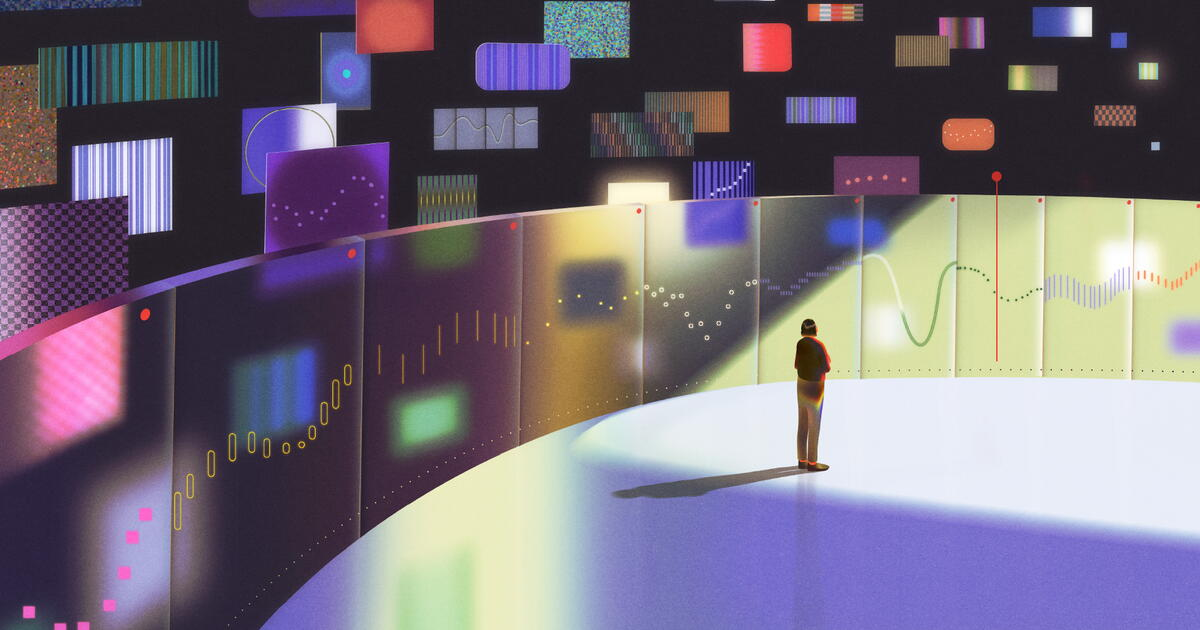
A magazine can map what happened this month; the useful question is what readers decide to carry into the next one.
The issue began with a theme that appeared across very different source desks: connection as language practice, research infrastructure, care, memory, work and public life.
Those connections are not equally strong, and the evidence does not promise that every institutional commitment will become an outcome. It does show where people are building the conditions for something to move.
The next issue will have a different window and a different set of sources. This month’s invitation is simple: notice the bridge, then decide whether to cross it, strengthen it or ask who is still standing on the other side.
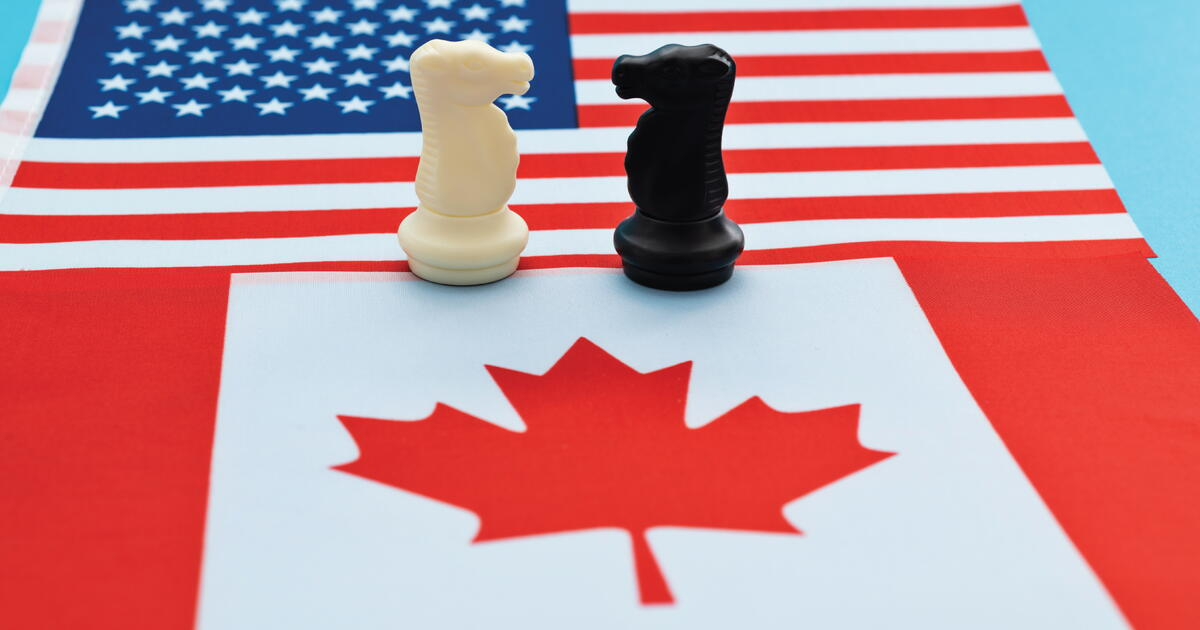
A visual meditation on Canadian and US economic interdependence.Source image and credit remain with UBC Magazine; reuse permission is unverified.
88 / 882026-09-18
opinion
When dependence becomes leverage
UBC Sauder’s Harish Krishnan uses the Canada–US relationship to examine how economic power can reshape business decisions and supply chains.
Original reporting by Stewart Prest
Harish Krishnan’s analysis begins with a concrete question about Bombardier and the US market. The wider lesson is about dependence: when one market matters disproportionately, access can become a source of pressure.
The article connects current tariff politics with a broader argument about economic leverage. It also notes a limit to that leverage, because cross-border firms bring suppliers, workers and customers on both sides of the relationship.
For alumni watching their own industries, the useful takeaway is a question rather than a forecast: where are the alternatives, and what would it take to build them?